Strong opposition to data centers more than doubles in a year
Heatmap Pro polling finds 75% of Americans now oppose a data center near home.
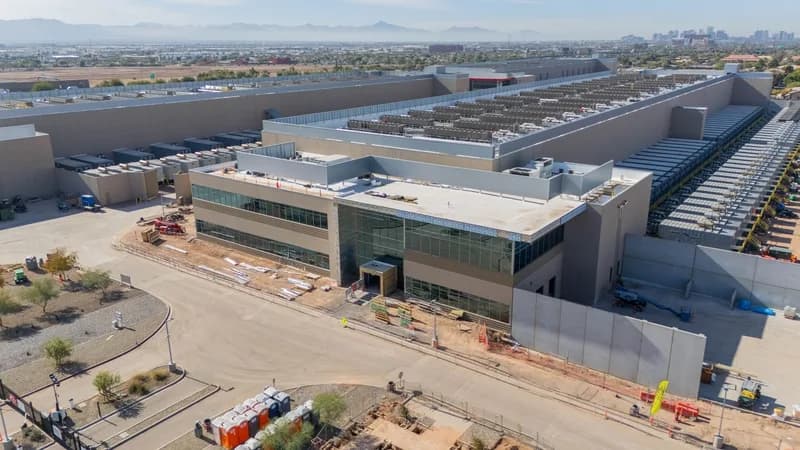
Three-quarters of Americans say they would oppose a data center built near their home, an opposition that has climbed 33 percentage points in a single year and is now driving local bans and state moratorium bills across the country.
The finding comes from a Heatmap Pro poll released Aug. 19, which surveyed 2,045 registered voters through text-to-web responses from Aug. 8 to 13, with a margin of sampling error of plus or minus 2.3 percentage points. More than six in 10 said they would strongly oppose one. Heatmap has asked the same question four times in the past year without changing its wording.
A year ago the public was split. In August 2025, about 43 percent of respondents supported a data center in their area and 42 percent opposed one. By February the opposed share reached 51 percent, by May it hit seven in 10, and it now stands at 75 percent.
A shift across every group
Robinson Meyer, Heatmap's founding executive editor, wrote that the move against data centers spans age, gender, income, party identification and the rural-urban divide. By his account the facilities run 43 points underwater with Republicans and 65 points with independents. They are 75 points underwater with Democrats and 63 points among rural voters.
Other pollsters have found similar hostility. A Gallup survey fielded in March and released in May put opposition at 71 percent, with 48 percent strongly opposed and strong support at 7 percent. It was the first time Gallup had asked the public about data center construction. A Fox News poll found 30 percent of voters in favor and 70 percent against.
A Pew Research Center survey released this year found that among Americans who had heard a lot about data centers, 67 percent believed the facilities were mostly bad for household energy costs.
Residents in communities targeted for development cite higher power bills, water use, noise and strain on local infrastructure. In the Fox News poll, supporters pointed to jobs, tax revenue and economic growth, while opponents named environmental concerns. Only about 8 percent of those who oppose data centers live near one.
Statehouses move to slow construction
Good Jobs First, which tracks state subsidy policy, counted at least 12 in-session states with filed data center moratorium bills as of March 9. Most have since stalled. Georgia's HB 1012, which died with this year's session, would have barred cities and counties from issuing permits for new data centers until March 1, 2027. Oklahoma's SB 1488, which did not pass, would have halted new construction until Nov. 1, 2029, while state regulators studied effects on water supply, utility rates, property values and siting.
New Hampshire's HB 1265 would have stopped construction statewide for a year and created a legislative committee on environmental impacts, but the House killed it on March 11. Vermont's S.205 as introduced would run a moratorium on AI data centers through July 1, 2030, and remains in committee. Heatmap Pro counted more than 530 local data center laws, across more than 500 counties and municipalities, as of July 30.
New York went further than most. Its legislature passed the Responsible Data Center Development Act in June, though the bill has not been enacted, and Governor Kathy Hochul instead issued Executive Order 62 on July 14, pausing state environmental permits for up to a year while regulators prepare a generic environmental impact statement.
Under the order, the Department of Environmental Conservation will not issue discretionary permits that were not already deemed complete.
A common thread runs through the state bills: who pays to connect the facilities to the grid. An analysis published by the Union of Concerned Scientists in September 2025 identified 130 transmission projects approved in 2024 by utilities in seven PJM states for the sole purpose of connecting private data centers, at a combined cost of about $4.3 billion.
Who pays for the grid
More than 95 percent of those projects were charged to general transmission rates recovered from all retail customers rather than billed to the companies requesting the connections. Virginia accounted for roughly $1.9 billion, Ohio $1.3 billion, Pennsylvania $491.7 million, Illinois $239 million, West Virginia $215.8 million, Maryland $107.5 million and New Jersey $14.5 million.
Free. One click to unsubscribe.
Representative Josh Riley of New York introduced the Fair Data Act, H.R. 9655, in July. It would require data center developers and operators to pay for the power generation, transmission and distribution upgrades their facilities need rather than passing those costs to ratepayers. Mike Jacobs, the senior energy manager who conducted the Union of Concerned Scientists analysis, put the stakes bluntly.
The big tech companies rushing to build out massive data centers are worth trillions of dollars, yet they're successfully exploiting an outdated regulatory process to pawn billions of dollars of costs off on families who may never even use their products
Riley made a similar argument at an event in West Oneonta on Aug. 20, recalling how his parents once balanced the household budget with an envelope for each line item and saying too many upstate New Yorkers now find it harder to fill them.
The industry has begun to acknowledge the mood. Sam Altman, the chief executive of OpenAI, told Time that people are negative on artificial intelligence and hostile to the facilities that power it, even as his company plans to spend $50 billion this year on computing. OpenAI's head of data centers, Chris Malone, left the company the week before that interview was published on Aug. 26, the Wall Street Journal reported.
The fight reaches St. Louis
In St. Louis, planning staff spent the past year drafting zoning rules after a developer's proposal to build a data center in the Armory building in Midtown surfaced last September. Mayor Cara Spencer ordered the work through an executive order, and City Planning Executive Miriam Keller led a plan that classifies data centers by size and sets renewable energy, light and sound requirements.
The bill has split the Board of Aldermen. Ward 1 Alderwoman Anne Schweitzer presented the rules in July and said the amendments that followed weakened them. Alderman Tom Oldenburg won a renewable-energy waiver, and Alderwoman Jami Cox Antwi won an exception to a cap on ground-floor use and an exemption for medical school campuses on small data centers. The Planning Commission rejected the amendments, and aldermen returned in special session on Aug. 28 to tighten the renewable energy and sustainability requirements.
The Armory Innovation District, a $3 billion, 120-megawatt center near the Armory in Midtown, is moving forward under a conditional use permit that requires sound and heat controls, a closed-loop cooling system and at least 50 percent renewable energy within five years.
- Strongly oppose
- Strongly support
Latest · Strongly oppose 61 · Strongly support 4
Heatmap Pro survey
The intensity has moved as fast as the topline. In the Heatmap Pro tracking, the share strongly opposed rose from 24 percent in August 2025 to 37 percent in February, 55 percent in May and 61 percent in August. Strong support fell from 13 percent to 4 percent over the same year.
The opposition is landing on enormous sums, with at least 48 data center projects representing $156 billion in investment blocked or stalled by local resistance in 2025 alone, according to figures cited by Fortune. OpenAI's Stargate venture with SoftBank, launched in January 2025, carries plans to invest as much as $500 billion in United States AI infrastructure over four years.
Demand is climbing underneath the fight. U.S. power consumption grew about 1.7 percent a year from 2020 through 2025 after barely rising over the previous 15 years, and the Energy Information Administration says data centers are helping drive the increase. In Texas, Governor Greg Abbott ordered regulators to scrutinize data centers seeking to connect to the state grid, which his office said was facing roughly 474 gigawatts of large-load requests, most of them from data centers.
Decisions due this fall
St. Louis's amended bill goes back to the Planning Commission for a second look after aldermen tightened it on Aug. 28. New York's environmental agency is preparing its impact statement during a pause that could last a year, and Riley's Fair Data Act awaits action in Congress. Whether any of them becomes law is not yet known.
More from Threadline News
 PoliticsAndrew Tanaka charged with four attempted murder counts in I-35 shootings8 Oct 2026
 PoliticsSheikhdoon Mohamud charged in alleged Mall of America attack plot8 Oct 2026
 PoliticsTrump jokes he created a monster in Treasury chief Bessent7 Oct 2026
 PoliticsChrista Pike is conscious as lawyers seek execution records7 Oct 2026
 PoliticsDennis Hastert, longest-serving Republican House speaker, dies at 845 Oct 2026
 PoliticsJudge sets $10,000 bond for Nathalie Belizaire in neglect case2 Oct 2026
Free. One click to unsubscribe, in every email. We do not sell or share addresses: privacy.
The Numbers
AllOfficial series, each dated to the observation it comes from.
Federal Reserve Bank of St. Louis