Trump urged Jensen Huang to stay on as Nvidia chief
Huang resigned two days later and now faces an FBI inquiry and House questioning.
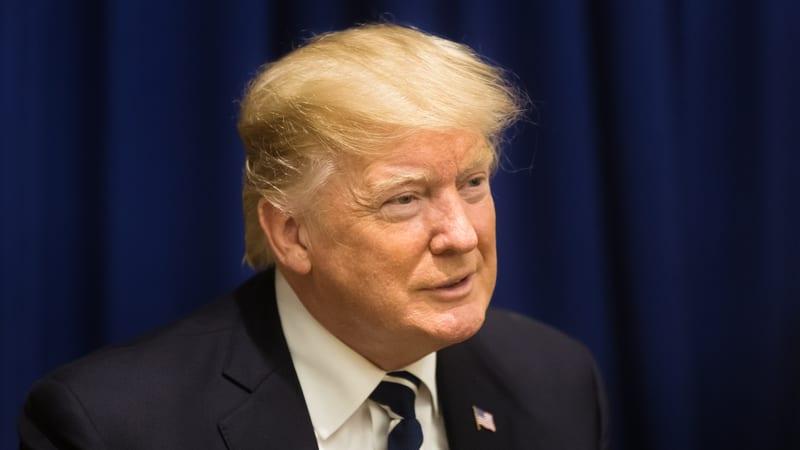
President Donald Trump called Jensen Huang on Tuesday and urged him not to resign as Nvidia's chief executive, two days before Huang stepped down over a series of affairs, including one with a woman U.S. intelligence suspects of spying for China.
The New York Times reported the call, citing two people familiar with the conversation. Trump, 80, and Huang, 63, spoke by phone twice this week. CNN's Kaitlan Collins said Thursday night that the first call came on Monday, when the president said he phoned to check in, and the second on Tuesday.
Two calls before the resignation
Trump disclosed the Monday call himself, at an impromptu briefing where he also revealed that the FBI was examining Huang. He said he had spoken to the executive earlier that day and had been told Huang had "no idea" the younger woman allegedly worked for Beijing. "And I really believe him," Trump told reporters, the Daily Beast reported.
He could not say when he became aware of the allegations, which raised concerns about whether information about Nvidia's advanced artificial intelligence chips had been compromised. Trump described Huang as a "high quality person" and "an amazing guy" who was "really suffering" because of the effect on his family.
I spoke to him yesterday, he's going through hell. What he feels most badly about is his wife and family.
Trump made the remarks in an interview with sports commentator Stephen A. Smith on Thursday, saying Huang had called him and talked about what the affairs had done to his wife and children. He praised the engineer's chips, which he said "can't be copied because of their level of genius." Whether the woman was a spy had not been determined, Trump said, and if she was not, "perhaps it would be different."
Trump named a successor before Nvidia's board did. In a Truth Social post he wrote that there was "only one man to take his place," Tim Cook of Apple, and added, "A Legend replaces a Legend!" Cook stepped down as Apple's chief executive on Sept. 1, when John Ternus took the job.
The meetings on the record
The two men have met many times since Trump returned to the White House in January 2025, according to a timeline of their public interactions published by Reuters. Huang was at the White House in July 2025 before a trip to China, and later that month Trump singled him out at an AI summit. "Jensen, will you stand up? What a job, what a job you've done," the president said.
Huang joined Trump's state visit to Britain in September 2025 and spoke at a U.S.-Saudi investment forum in Washington that November. In May 2026 Trump asked him, as a late addition to the trip, to join the technology chief executives flying to Beijing to meet President Xi Jinping; Huang was seen boarding Air Force One at a refueling stop in Alaska.
The White House named Huang in late March 2026 to the 13-member President's Council of Advisors on Science and Technology. At a Los Angeles summit in mid-September, Huang took a call from Trump on stage and put him on speaker; during the roughly five-minute conversation the president called fears about AI safety a "hoax."
In early October, Trump awarded Huang the National Medal of Science, the United States' highest honor for scientists and engineers, and the same day disclosed buying up to $1.6 million and selling up to $1 million in Nvidia stock over the summer of 2026. The Washington Post reported in mid-October that Nvidia had committed $25 million for Trump's planned White House ballroom.
In January 2026 Trump's administration began allowing exports of Nvidia's powerful H200 AI chips to China on a case-by-case basis, while keeping restrictions on organizations Washington had placed on a trade restriction list. The Daily Beast reported that the approvals came in exchange for a 25 percent fee.
Free. One click to unsubscribe.
Three weeks to the exit
Reports surfaced on Oct. 29 about Huang's "close relationship" with Alice Huang, a Chinese national and executive at the Singapore-based firm Megaspeed whom U.S. officials suspected of spying for Beijing. The two are not related. Nvidia initially called the interactions "not unusual or unexpected."
Huang admitted the affair on Nov. 8 in a letter to employees, writing, "I was unfaithful to my wife," and saying there was no excuse for what he had done. He has denied knowing anything about an espionage operation.
A New York Times report on Nov. 11 citing five people who had worked at Nvidia alleged that Huang had also been involved with Kimberly Powell, the company's vice president of health care, who reports directly to him. Nvidia, Huang and Powell did not confirm the allegations. The Times described that relationship as "affectionate," and Reuters reported a day later on a relationship with a second, unnamed employee.
Huang's exit came two weeks after the first report about Alice Huang.
Nvidia's board accepted the resignation on Thursday, ending Huang's 33 years at the chipmaker he co-founded and built into a $4 trillion company. Colette Kress, the chief financial officer, was named interim chief executive, and Harvey Jones was named board chair. Jones said the board had full confidence in Kress and the leadership team and expected the company's "operations, customer commitments and product roadmap to continue without interruption."
The inquiries now facing Huang
Huang resigned on November 12 and faces an FBI investigation and congressional hearings, Reuters reported. CNN reported that he had been summoned to testify before Congress after stepping down as chief executive.
Three House Republican committee chairs have asked Huang to sit for a transcribed interview on Dec. 1.
Trump did not describe the scope of the FBI inquiry when he disclosed it, saying only that the bureau was "looking into it in terms of something else" and that he thought Huang would "be in good shape."
Aides told the New York Times that Trump was less troubled by the national security implications than by the market impact of a resignation. He treated the matter as adultery, which he dismissed as inconsequential to the country's defense, and asked aides what would happen to markets if Huang stepped down, fearing an abrupt decline.
The spy question, unresolved
Alice Huang was previously an executive at Megaspeed International, a Singapore-based data center company that has faced scrutiny over allegations that it helped funnel restricted Nvidia chips into China; U.S. intelligence officials believe she was gathering information for Beijing.
Nvidia's board opened an independent investigation into the allegations and said it had no reason to believe that national security or company secrets had been compromised. Days before the resignation, the board expressed confidence in Huang and said he would remain chief executive while the inquiry proceeded.
Trump said he was "amazed" by the revelations about one of his closest allies in Silicon Valley, Reuters reported. Asked at the Nov. 9 briefing whether he would raise the matter with Xi when the two met, Trump said he did not expect to, but added: "I'm sure President Xi will ask me about it."
Lawmakers in both parties have called for a halt to exports of advanced AI chips to China, while Huang and the White House have argued that continued American sales would keep Chinese customers reliant on U.S. technology.
Nvidia said it would begin a search for a permanent chief executive and would consider both internal and external candidates. Kress was quoted in the company's announcement of the change. Huang was not.
More from Threadline News
 PoliticsFive federal agencies warn of attacks on freezer controls6 Nov 2026
 PoliticsLaKesha Womack unseats Tim Moore with felony charge pending6 Nov 2026
 PoliticsMegyn Kelly urges Republicans to rebuild without Trump on the ballot5 Nov 2026
 PoliticsNTSB says Learjet may have broken up before Florida crash3 Nov 2026
 PoliticsSen. Chris Murphy transferred to Johns Hopkins after stroke2 Nov 2026
 PoliticsAbubakarr Barrie held without bail on nine charges in Baltimore stabbing28 Oct 2026
Free. One click to unsubscribe, in every email. We do not sell or share addresses: privacy.
The Numbers
AllOfficial series, each dated to the observation it comes from.
Federal Reserve Bank of St. Louis