Army Reserve canvasses units for Cuba planning within 120 days
Internal Army message asks commands if six unit types could be available in 120 days.
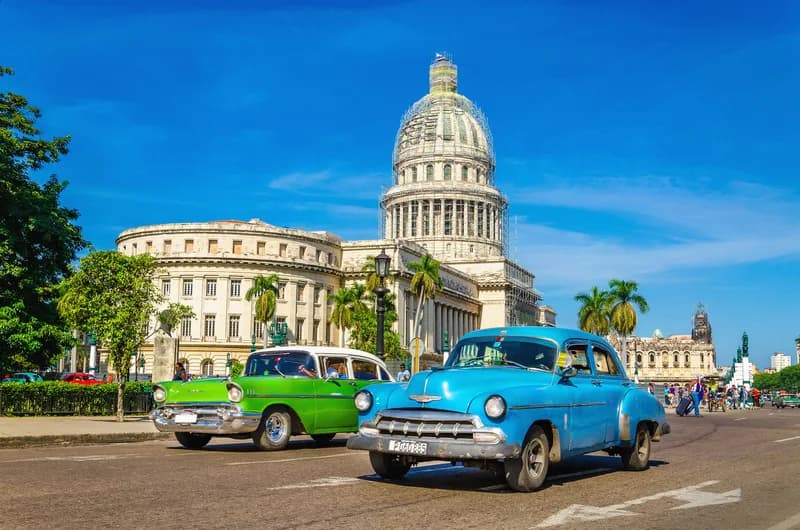
The U.S. Army Reserve is examining whether it can supply military police, medical staff and logistics units to U.S. Southern Command within the next four months, part of continued American military planning aimed at Cuba.
The request is contained in an internal Army message reviewed by CBS News, which first reported its contents. The message makes no reference to Cuba. Multiple U.S. officials who spoke to CBS News on condition of anonymity, because they were not authorized to speak publicly, said the request is for continued military planning aimed at the island.
Nothing in the document indicates that any unit has received deployment orders. It does not say how many troops would be needed, where they could be sent, or what operation they would support. The planning comes as the Trump administration presses Cuba economically and urges the government there to make political reforms.
What the message asks for
Army Reserve headquarters asked subordinate commands to report on the availability of six types of formations that would fall under Southern Command's authority, units the message describes as possibly needed in 90 to 120 days. Replies were due back by Sept. 25.
Half the list is logistics. The document, generated last week, seeks a combat sustainment support battalion, a formation that specializes in coordinating transportation, maintenance, fuel and supply needs, along with an engineer battalion. It also asks about an expeditionary sustainment command, the headquarters that would oversee logistics across a theater of operations.
The other three formations deal with casualties and security. The message asks about a medical brigade to command and coordinate medical units, and a forward resuscitative and surgical detachment, which provides emergency surgery and trauma care closer to U.S. forces. The sixth is a military police brigade, a formation that typically oversees military police responsible for security, detention and other law enforcement missions.
Southern Command cites operational security
The Army Reserve did not respond to questions from CBS News before publication. A spokesperson for U.S. Southern Command declined to discuss operational movements or deployment timelines, and said the command continuously coordinates with the Joint Force to assess potential requirements across its area of responsibility, which covers Central and South America, including the Caribbean.
CBS News said in its report that it is withholding certain details from publication that could potentially put U.S. service members at risk.
Due to operational security concerns, we do not disclose details or comment on U.S. operational movements or potential deployment timelines associated with current or future operations, contingencies, or planning.
Earlier this year, American forces conducted reconnaissance operations on the seafloor and the maritime approaches surrounding Cuba, multiple U.S. military personnel told CBS News. U.S. airpower components were separately placed on heightened readiness and directed to pre-stage personnel for potential deployment. Those plans did not come to fruition.
Options examined since the spring
CBS News reported in July that American military planners had examined a range of options for possible action against the island, including an Army-led air assault involving thousands of soldiers, to be carried out by the 101st Airborne Division, the only unit trained for such a task.
Officials who spoke to CBS News at the time stressed that the briefings were not an indication that the president or the Pentagon had decided to go forward with an operation.
In May, CBS News reported that U.S. intelligence officials were assessing how Cuba would respond to possible U.S. military action. The Trump administration had accused Havana of strengthening its ties with Russia, China and Iran.
The intelligence community's 2026 annual threat assessment largely portrays Cuba as an enabling environment for larger geopolitical competitors, rather than as an independent strategic threat.
Sanctions on nickel and weapons work
Secretary of State Marco Rubio designated 11 actors on Sept. 17 under Executive Order 14404, according to a State Department press statement. They are four state-run enterprises the department said strip Cuba's nickel reserves for regime profit, four military enterprises dedicated to research and development for weapons systems, naval capabilities and battlefield simulation, and three military officials leading them.
The order, Imposing Sanctions on Those Responsible for Repression in Cuba and for Threats to United States National Security and Foreign Policy, authorizes sanctions on people who support the Cuban government's security apparatus. Rubio said in the statement that the government had for decades channeled the island's resources into the hands of a narrow and corrupt military elite, leaving ordinary Cubans without reliable power, food, or dignity.
Cuba's fuel blockade since January
The military planning has run alongside an economic campaign that has squeezed Cuba's fuel supply since January. The New Republic, in a post published Friday, said the blockade had contributed to widespread food insecurity and economic collapse, and that infant mortality on the island had doubled.
A Wikipedia entry tracking the crisis dates the blockade to 3 January and lists it as ongoing, with the United States threatening to sanction any country that exports oil to Cuba and calling for President Miguel Díaz-Canel to resign. The entry also records that Cuba released more than 2,000 prisoners and that a Russian tanker carrying 100,000 tonnes of crude oil reached the island on 30 March.
Trump's U.N. speech, Havana's walkout
President Trump used his address to the United Nations General Assembly days before the Army message was reported to call for the downfall of the Cuban government, saying that freedom would be coming to Cuba, according to The New Republic. The Cuban delegation walked out.
The magazine described Rubio's approach as blocking key resources and imposing harsh sanctions, and quoted him calling the Cuban government a state sponsor of terrorism that spies on America. It said the administration has also accused Cuba's doctor export program of human trafficking and claimed the government aids international terrorism. Rubio said last month that Havana could not wait the administration out.
What we're trying to teach them is there are no escape valves.... Every time they create a new mechanism in which they try to get out of the noose, we just close it off
Since September, the U.S. military has killed more than 230 people in 70 strikes in the Caribbean Sea and the eastern Pacific Ocean, CBS News reported. The operations differ from the military's historical role of maritime drug interdiction and arrest. Some legal experts have said the strikes amount to illegal extrajudicial killings.
In April, American and Ecuadorian troops launched a joint mission aimed at dismantling a suspected criminal hub operated by a narco-terrorist organization. On Thursday, U.S. troops and agents with the Drug Enforcement Administration assisted Ecuadorian authorities in arresting more than 30 members affiliated with Mexico's Jalisco New Generation Cartel.
Trump has asserted a more muscular U.S. role in the Western Hemisphere since reentering office, under what officials have dubbed the Donroe Doctrine, a Trump-era corollary to the Monroe Doctrine focused on limiting foreign adversaries and other perceived threats in the region.
The message sets no decision date at the end of the 90 to 120 day window it describes. It asks only whether the formations could be made available.
Sources for this article
4 sources
- 1CBS News, U.S. military lays groundwork for potential action around Cuba
- 2The New Republic, U.S. Military Prepares for Possible Action in Cuba
- 3State Department press statement, Further Sanctions on Cuba's Mineral Wealth and Military Modernization Apparatus
- 4Wikipedia entry, 2026 United States fuel blockade on Cuba
More from Threadline News
 WorldBrianna Cronin, 29, dies in fall at Bali's Kelingking Beach14 Sep 2026
 WorldItalian police report calls ambulance driver Luca Spada a serial predator11 Sep 2026
 WorldBoy, 15, survives days on overturned skiff in Bering Sea11 Sep 2026
 WorldRetired general warns Kremlin car may have exposed Trump envoys' phones9 Sep 2026
 World500 teens swarm Aurora shopping center, police declare unlawful assembly2 Sep 2026
 WorldSwiss police arrest 43-year-old in deadly Aarau rave shooting31 Aug 2026
The Numbers
AllOfficial series, each dated to the observation it comes from.
Federal Reserve Bank of St. Louis