The city where Colombia's president was sworn in is now digging out
Abelardo de la Espriella declared a national emergency and put the military behind the response, days into the job.
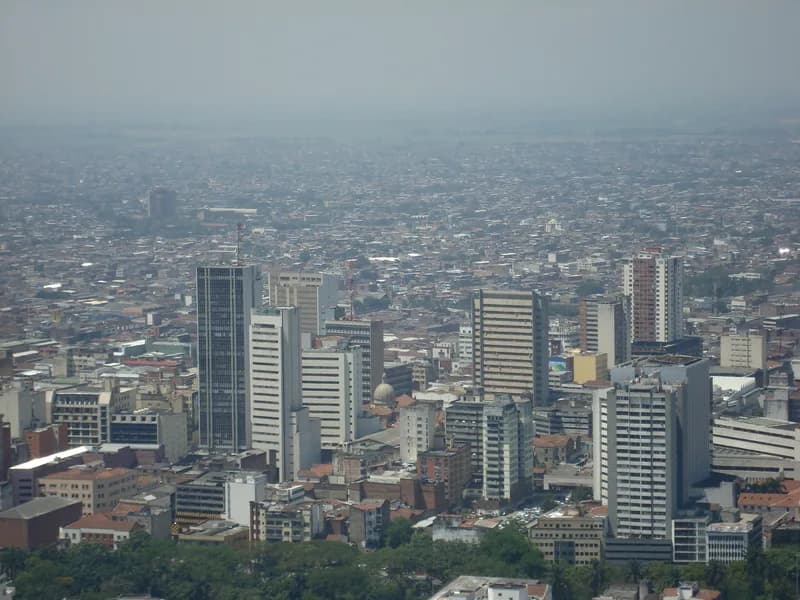
On Friday, August 7, Abelardo de la Espriella took the oath as Colombia's president in Cali. By the morning of Monday, August 10, Cali was pulling people out of collapsed buildings. His third day in office ended with a national emergency declared in the city where he was sworn in.
The magnitude 7.4 earthquake that hit western Colombia has killed at least 132 people and injured 570. De la Espriella declared a national state of emergency, flew to Quibdo and then to Cali, and promised rental subsidies to people whose homes were wrecked.
It is the first real test of a government that has been in office for a long weekend, and it landed in the exact places his presidency has been about. Cali, where he took the oath on Friday, is where the biggest rescue operation is running.
From El Salvador, we are in communication and ready to provide immediate support with our rescue teams, medical personnel, paramedics, supplies, or any other assistance that our Colombian brothers and sisters deem necessary.
What he did on day three
He said rescuing people trapped under rubble was the government's first priority, and that it had mobilised the entire military and police apparatus. He led an earthquake response meeting in Bogota on Monday before travelling to the affected regions.
Cali got the heaviest deployment. About 1,000 security force members were due in the city by dawn after reports of looting, on top of the search teams. The city declared a night curfew. Al Jazeera reports curfews in Armenia and Manizales too.
That is the response any government would run. What makes this one worth watching is the timing. The machinery he is directing was built long before he arrived. He has been in charge of it since Friday, with a programme written for something else entirely.
Cali is the awkward part. It is where he chose to hold his inauguration, and three days later it is where the search teams are. The city says 380 of its buildings were damaged. Several top floors of one hospital collapsed inward, some of them pediatric wards.
The aid that arrived first
Washington moved on Monday. The State Department announced $15.5 million for emergency shelter, food and other relief. Secretary of State Marco Rubio said the United States was watching closely and stood ready to help.
That is separate from the much larger package the department flagged three days earlier, when de la Espriella was sworn in. The roughly $1 billion in security assistance still needs approval from Congress.
The offers came from across the region, and from governments that do not agree on much. El Salvador put rescue teams, medical staff, paramedics and supplies on standby. Nayib Bukele said his country was ready to send whatever Colombia deemed necessary.
Mexico's Claudia Sheinbaum said her country was ready to assist. Both El Salvador and Mexico were among the largest donors to Venezuela after its twin earthquakes in June. The European Union switched on its Copernicus satellite service to help map the damage.
| United States | $15.5 million for shelter, food and other relief |
| El Salvador | Rescue teams, medical staff, paramedics and supplies |
| Mexico | Ready to assist, details not specified |
| European Union | Copernicus satellite mapping for rescue operations |
| Colombian government | National state of emergency, rental subsidies promised |
As filed
A government built for a different fight
De la Espriella did not campaign on disaster management. He campaigned on force. Al Jazeera describes him as far right. His inaugural address promised to relentlessly defeat narco-terrorism and declared that the option of dialogue was completely exhausted.
In late June, on the day he received his winner's credentials, he gave the armed groups a deadline to surrender. Accounts of its length differ. Colombian outlets reported at the time that he gave them a month. One policy tracker has since described it as 100 days.
The money side of his programme is just as specific. He has promised to cut government spending by as much as 40 percent, close 14 embassies and shut 15 consulates, and redirect what that saves toward security and public investment. Those were the plans as of Friday.
An emergency declaration pulls the other way. It exists to move money quickly, outside the normal budget process, into places that need it now. Three days after promising to close spending channels, he has opened one.
Whether those two things collide depends on a number nobody has yet. The cuts were specific and public. The reconstruction bill will not be known for weeks, and earthquake recovery is measured in years rather than months.
Where his politics meet the map
The geography is difficult for him. Choco, which took the epicenter, is among Colombia's poorest and most remote regions. Much of it is reachable only by boat or plane, and the extent of the damage there was still unclear a full day after the quake.
The southwest of the country, where the shaking did the most harm, is also contested territory. Al Jazeera describes it as fought over by FARC dissidents, the Clan del Golfo and the ELN. Those are the groups he has promised to defeat rather than negotiate with.
Cali was not his first choice for the inauguration either. He wanted the ceremony on a military base in Cauca, and volcanic activity nearby scuttled that plan. Cali is where he registered his candidacy, and it has been a stronghold for the left he beat.
Petro is still a factor
Gustavo Petro has questioned the result that put de la Espriella in office. He has not produced credible evidence for it, and Colombia's electoral authorities and international observers have dismissed the claim.
The dispute has not gone quiet. Protests broke out in Cali, Bogota and Barranquilla on inauguration day. A government days old now needs cooperation from regional authorities, many of them elected on the other side of that argument.
Disasters can settle that kind of quarrel or sharpen it, and which way it goes usually depends on whether the relief is seen to reach everyone. That is a question about Choco as much as about Cali.
Too early for a verdict
None of this is a judgement on him. He has been president since Friday and the earthquake was not his doing. No government of any stripe would have had a plan ready for a magnitude 7.4 quake in its first week.
It is a record of what landed on his desk in the first week, and of a programme written for a different problem. The armed groups, the embassies and the spending cuts are all still on the list. So now is a coffee region full of rubble.
Sources for this article
4 sources
- 1Al Jazeera, Colombia quake, frantic search for survivors as over 2,700 reported missing
- 2Euronews, At least 132 dead, 570 injured after Colombia quake
- 3Al Jazeera, De la Espriella sworn in as Colombia's leader, vows armed group crackdown
- 4AS/COA, Ahead of Inauguration, Colombia's De la Espriella Sets Agenda
More from Threadline News
 WorldMalawi police offer K30 million reward for abducted Nusrat Osman15 Sep 2026
 WorldBrianna Cronin, 29, dies in fall at Bali's Kelingking Beach14 Sep 2026
 WorldItalian police report calls ambulance driver Luca Spada a serial predator11 Sep 2026
 WorldBoy, 15, survives days on overturned skiff in Bering Sea11 Sep 2026
 WorldRetired general warns Kremlin car may have exposed Trump envoys' phones9 Sep 2026
 World500 teens swarm Aurora shopping center, police declare unlawful assembly2 Sep 2026
The Numbers
AllOfficial series, each dated to the observation it comes from.
Federal Reserve Bank of St. Louis