Mexico sends 1,500 troops to Michoacan after avocado inspection halt
Sheinbaum ordered troops to Michoacan after Washington halted avocado inspections over a security threat.
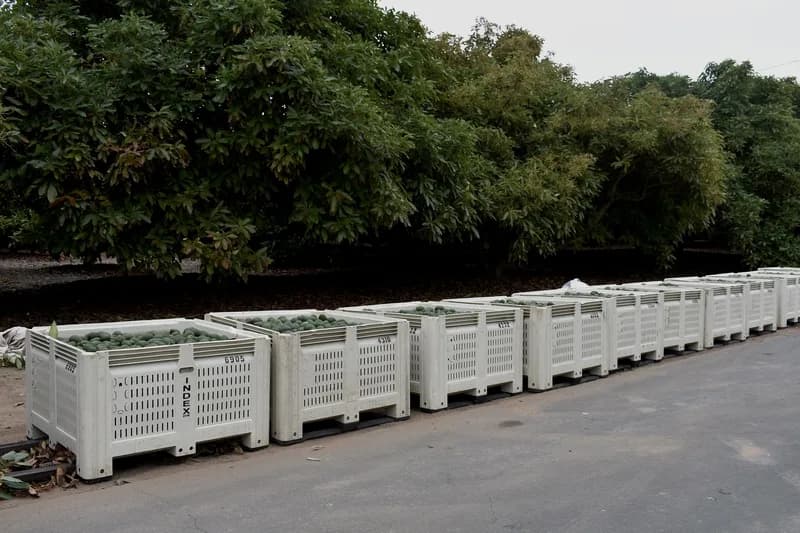
Mexico began sending more than 1,500 soldiers and National Guard members to the western state of Michoacan on Thursday, a day after the United States suspended the avocado export inspections required to ship the fruit to its largest market.
President Claudia Sheinbaum announced the increase in security, saying it was meant to restore the exports as quickly as possible and to keep the halt from doing serious harm to Mexico's economy or to U.S. supply. Her government is coordinating what she called a work plan with state and federal authorities.
The United States announced Wednesday that it had suspended all government operations in Michoacan because of what its embassy described as a threat to U.S. interests. Among the operations halted were the U.S. Department of Agriculture inspections that avocados must pass at authorized packing houses before they can enter the United States.
Why the inspections stopped
The U.S. Embassy did not describe the nature of the threat in its security alert. Governor Alfredo Ramírez Bedolla said on social media that the halt was meant to safeguard workers after recent arrests tied to extortion investigations.
No attack on inspectors was reported this time, a distinction from previous pauses, and Michoacan authorities called the suspension preventive. A state government official told Reuters that the alert may have followed violence after the weekend capture of an alleged cartel leader, adding that authorities had received unconfirmed reports that a USDA inspector was threatened. A bus was set on fire after the arrest in what officials suspect was retaliation.
Michoacan State Security Secretary Antonio Cruz told The Associated Press that one arrest was of Alfonso Fernández Magallón, identified by the AP as El Poncho and by Reuters as La Quiringua, described as the leader of a local cartel around Los Reyes. The U.S. had offered a $5 million reward for him, and Ambassador Ronald Johnson welcomed the capture.
A trade worth billions
Mexico sold $3.65 billion worth of avocados to the United States in 2025. In the first four months of 2026, those exports rose 35 percent from a year earlier, and the country is on track to ship roughly 1.2 million metric tons to the United States this year, according to USDA data cited by Reuters. Demand from that market has helped drive total Mexican avocado exports toward a record.
The United States accounts for nearly 90 percent of Mexico's avocado exports by volume, which makes it by far the country's largest foreign buyer. Seen from the other direction, more than 80 percent of the avocados eaten in the United States come from Mexico, a product known across the region as green gold.
The crop is central to Michoacan's economy, where its cultivation generates around 200,000 jobs, the governor said. The state is the leading exporter of avocados to the United States and for years was the only Mexican state the USDA had certified to ship them across the border, a trade that has recovered quickly from past disruptions.
Since 2022, the state of Jalisco has also shipped avocados to the United States, a much smaller source that this suspension, which is limited to Michoacan-grown fruit, leaves untouched.
How the halt works
USDA personnel monitor plantations and packing houses in Mexico to confirm that exported fruit is free of pests, and their onsite approval is required before a shipment can cross into the country. A USDA spokesperson told CNN that any produce needing that approval and lacking it is not eligible for import, while shipments that finish the process would still be allowed in.
APEAM, the country's avocado producers and packers association, said only fruit received Tuesday in the presence of a USDA official could be processed. Fruit that arrived Wednesday could be unloaded but not processed, it said, and no export shipments were authorized that day, leaving each packing plant to decide how to handle the harvest.
The shipment of fruit destined for export is not authorized, so each packing plant must evaluate and make the operational decisions it deems appropriate regarding harvesting during this day.
The Mexican Hass Avocado Association told its members on Thursday that it does not expect the pause to seriously hurt cross-border sales, pointing to fruit already moving through the supply chain and to existing inventories.
In its letter to members, the association said current supply chain conditions were expected to support near-term U.S. market needs. Producers caution, though, that a quick return to shipping does not mean the extortion cartels impose on the industry has eased, a point growers have made in past pauses as well.
Organized crime groups in Michoacan have long targeted growers and exporters. Cartels collect monthly protection payments calculated by cultivated hectare or by exported kilogram, according to InSight Crime, and at least four groups operate in the state, all of them designated as terrorist organizations by the Trump administration.
A pattern of pauses
In 2024, the United States paused all avocado imports from Michoacan for more than a week after two USDA inspectors were assaulted and detained at a police roadblock. Officials at the time described a direct attack on U.S. personnel, which sets that episode apart from this week's preventive halt, when no such incident was reported.
Cruz said his department was unaware of any direct incident involving the inspectors this time, and 300 security personnel were sent to the Los Reyes area as a precaution before the larger deployment on Thursday. When inspections are halted, Mexican authorities typically respond with offers of increased security, as Sheinbaum did this week.
What Sheinbaum proposed
Sheinbaum also suggested that Mexican officials could carry out the inspections themselves as an interim step, an option raised before but not adopted, because the USDA has kept control of the verifications while Mexican security forces accompany its inspectors.
cartels cannot be allowed to exploit the United States-Mexico-Canada Agreement to undercut American growers and destroy domestic production
The commission also called for stronger monitoring of fruit headed north after a pest was reported at a Mexican packing house, and it said cartels should not be allowed to intervene in the industry. Its president, Ken Melban, said the Trump administration was right to protect American personnel and to confront the cartels operating in the growing region.
What is not known
Neither Washington nor Mexico City has said when the inspections will resume. The U.S. Embassy has not described the specific threat behind the order, which the State Department applied to all U.S. government activity in Michoacan, not only agricultural work, and which followed a security alert on the state.
The USDA did not immediately respond to a request for comment on whether an inspector had been threatened. That report remains unconfirmed, according to the state official who described it to Reuters and was not authorized to speak publicly.
The suspension followed a security alert that keeps Michoacan under the State Department's Level 4 designation, its most severe, which tells Americans not to travel there because of the risk of violence from terrorist groups, cartels, gangs and criminal organizations. The department advises increased caution throughout Mexico.
Ramírez said state officials were in contact with the U.S. Embassy and working with security authorities in both countries to secure the conditions the inspections need to resume normally.
The stakes ahead
A prolonged suspension could slow or temporarily stop shipments from the region that supplies most U.S. avocados, though industry groups expect fruit already in the pipeline to cover near-term demand. Mexican avocado exports overall are on track to reach a record 1.31 million metric tons this year, with the United States taking nearly all of it.
Sources for this article
8 sources · all statements · Retrieved 7 Aug 2026
- 1APEAM statement on suspended USDA inspections in Michoacan, via Reuters
- 2Mexican Hass Avocado Association letter to members, via Reuters
- 3California Avocado Commission statement, via The Associated Press
- 4Associated Press report on the Michoacan suspension and El Poncho arrest
- 5USDA spokesperson comments to CNN on import eligibility
- 6Associated Press explainer on the export halt and Sheinbaum's response
- 7State Department Level 4 advisory context, via Unbiased Times
- 8InSight Crime and Jalisco certification background, via Hoodline
More from Threadline News
 WorldBoy, 15, survives days on overturned skiff in Bering Sea11 Sep 2026
 WorldRetired general warns Kremlin car may have exposed Trump envoys' phones9 Sep 2026
 World500 teens swarm Aurora shopping center, police declare unlawful assembly2 Sep 2026
 WorldSwiss police arrest 43-year-old in deadly Aarau rave shooting31 Aug 2026
 WorldThieves steal 673-diamond royal necklace from Vienna museum29 Aug 2026
 WorldRussia warns it could strike British military targets over Kyiv's missiles28 Aug 2026
The Numbers
AllOfficial series, each dated to the observation it comes from.
Federal Reserve Bank of St. Louis