US invokes 1930 law to impose 50% tariffs on Canada
Trump invoked a dormant 1930 law; Carney suspended talks and will match the levies.
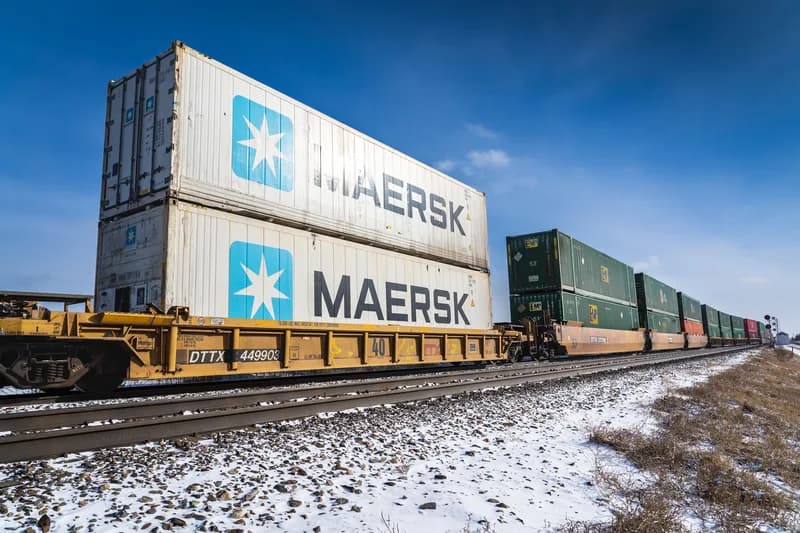
The United States imposed 50 percent tariffs on about $20 billion of Canadian goods early Saturday, invoking a 1930 trade law never before used to set a duty, and Canada said it would match the levies dollar for dollar.
The tariffs took effect at 12:01 a.m. Eastern and cover about 5 percent of everything Canada ships to the United States each year. Prime Minister Mark Carney announced the retaliation about half an hour before the deadline, ending weeks of on-and-off negotiation between the two governments.
What Ottawa is targeting
Carney said the U.S. tariffs covered roughly C$28 billion of Canadian goods and that Canada would match them dollar for dollar. He said important progress had been made in the talks but that it had not been enough to meet Canada's objectives, and his office paired the retaliation vow with a decision to break off the negotiations.
As a result, this evening, I have decided to suspend trade negotiations with the U.S. and have directed Canada's negotiators to return to Ottawa.
The tariff reaches hundreds of product categories, from hockey sticks and plywood to liquor, cement, furniture and electrical equipment. Everyday medical goods such as tongue depressors are covered too. A trade compliance analysis published by Freight Figures found the full list ran to hundreds of eight-digit tariff lines, extending to wine, seeds, fishing rods, swimming pools and even wigs.
The administration carved out several of Canada's largest exports, exempting energy, potash, critical minerals, fish and goods already covered by Section 232 tariffs. The 50 percent rate applies on top of existing tariffs and any other duties already owed, rather than replacing them.
The duties were imposed under Section 338 of the Tariff Act of 1930, which caps additional duties at 50 percent and which no president had used to impose tariffs in the 96 years since it became law. Trump signed three proclamations on July 20 covering alcoholic beverages, dairy and motor vehicles, with the 30-day delay the statute requires.
The collapse is an unprecedented rupture between the United States and its second-largest trading partner. Nearly $2 billion in goods and about 330,000 people cross the 5,525-mile border every day. The escalation also puts the future of the Canada-United States-Mexico Agreement in doubt, a pact that underpins industry in all three countries.
How the talks fell apart
The tariffs had been set to take effect on Aug. 19 before Trump postponed them less than two hours ahead of the deadline, granting a three-day extension for further talks. Dominic LeBlanc, the minister responsible for Canada-U.S. trade, returned to Washington on Aug. 20 to meet U.S. Trade Representative Jamieson Greer again, and the two met once more on Friday.
The two sides had outlined a broader deal in principle earlier in the week but could not finalize the documents, according to Axios. Carney said his negotiators had worked in good faith up until the very last minute, and alleged late changes from the American side.
Greer offered a different account, saying Canada had declined to finalize the trade deal on the terms agreed earlier that week and that new demands and walk-backs of other commitments had upended the balance reached in recent days. In July he had also cited Canada's provincial bans on American alcohol.
Those bans, imposed by every province and territory in March 2025 in response to earlier waves of Trump tariffs, remain a central grievance for Washington. Alberta and Saskatchewan lifted theirs in June 2025; U.S. alcohol is off the shelves in the other eight provinces. Carney asked the premiers this week to restock it as part of a deal, and most agreed in principle.
What Washington wanted
The United States sought several concessions during the negotiations. It pressed Canada to lift its remaining retaliatory tariffs on American autos and to widen dairy quotas so U.S. cheese producers could sell more into the protected market. Washington also wanted the provincial alcohol bans gone.
Free. One click to unsubscribe.
The two countries have argued over trade for decades, poking at sore spots like Canadian softwood lumber and American access to Canada's tightly protected dairy market. The fight over automobiles is newer, and it sits closer to the center of this dispute.
Canadian imports of American motor vehicles fell about 22 percent over the year ending in March 2026, from $25.9 billion to $20.3 billion, according to the White House. The administration has framed the tariffs as an answer to what it calls Canadian discrimination against American automotive commerce.
Greer had said before the deadline that the tariffs were themselves a response to Canada's retaliatory measures. Carney's government committed to matching the new levies anyway.
A public standoff
Barry Appleton, a senior fellow at the Center for International Law at New York Law School, said Canada had warned U.S. officials in advance that landed tariffs would end the negotiations, and that the U.S. trade representative had said publicly he would not tolerate retaliation.
With both sides committed in public, Appleton said, escalation had stopped being a matter of choice. Neither government has signaled a path back to the table.
Pressure on both sides
At home, Carney faces competing demands. Manitoba Premier Wab Kinew has urged the federal government to fight the tariffs, while business groups on both sides of the border had lobbied for a deal. The Carney government is caught between provincial leaders pushing for a tougher line and industry warning of economic harm from escalation.
How Canadians view it
Asked in early August how Ottawa should respond, 36 percent of Canadians picked counter-tariffs, 30 percent wanted talks to continue, 18 percent favoured concessions and 15 percent were unsure, according to a survey of 1,499 people by the Canadian firm Abacus Data conducted Aug. 7 to 12, before the deadline passed.
For exporters, the mechanics matter. The duty attaches to goods entered for U.S. consumption on or after 12:01 a.m. Saturday, based on the entry date rather than the date a shipment left Canada, according to trade compliance advisories.
Goods that fully qualify as Canadian under the trade pact are not spared, a feature industry advisers flagged as a trap for importers used to duty-free treatment. Canadian industry associations had told Ottawa the tariffs posed a serious risk to their sectors, citing heavy export exposure and potential job losses, and had pushed for blocking the measures outright or securing a delay for pact-compliant goods.
The covered trade of nearly $20 billion amounts to about 5 percent of the $381.9 billion in goods the United States imported from Canada in 2025.
What happens next
Canada has not detailed which American products its counter-tariffs will cover, and Carney's office did not say when the measures would take effect. His negotiators have been recalled to Ottawa. Neither government has named a date to return to the table, leaving the tariffs and the promised response in force with no scheduled talks.
Section 338 had been threatened before, against France in 1932 and against several other countries through the 1930s and 1940s, but never used to impose a duty until this proclamation. Goods admitted to a U.S. foreign trade zone on or after the effective date must enter in privileged foreign status and will carry the new duty when they are entered for consumption.
For now the American tariffs are in force and Canada's response is a stated intention with no products and no date, across a trading relationship worth roughly $880 billion in goods and services last year. Neither government has agreed to resume the talks.
More from Threadline News
 WorldArmy Reserve canvasses units for Cuba planning within 120 days25 Sep 2026
 WorldLebanon arrests Islamic State member over plot to kill Pope Leo XIV24 Sep 2026
 WorldHaiti extradites 18 suspects in Moïse assassination to U.S.21 Sep 2026
 WorldShark kills swimmer off Perth's Sorrento Beach18 Sep 2026
 WorldNTSB to analyze live broadcast video from LA helicopter crash17 Sep 2026
 WorldMalawi police offer K30 million reward for abducted Nusrat Osman15 Sep 2026
Free. One click to unsubscribe, in every email. We do not sell or share addresses: privacy.
The Numbers
AllOfficial series, each dated to the observation it comes from.
Federal Reserve Bank of St. Louis