US cyclosporiasis cases reach 15,716, over 13 times last year's total
Food-safety specialists say federal cuts thinned state teams as the parasite spread through recalled iceberg lettuce.
The United States has recorded 15,716 laboratory-confirmed cases of cyclosporiasis since May 1, more than 13 times the 1,180 the Centers for Disease Control and Prevention counted across the whole of last year's season, as federal cuts to food-safety agencies strain the response to the parasite.
The CDC published the figure in a surveillance update on August 18, covering cases reported through August 17. It counts only illnesses acquired inside the country during the 2026 season, which runs from May 1 through August 31. The agency says it is aware of at least 11,841 further cases that are not laboratory confirmed, or that need more investigation to establish whether they were acquired in the United States. It does not combine the two figures.
The 2025 season, which ran from May 1 to August 31, produced 1,180 cases in total. On the closer comparison, the CDC recorded 249 cases between May 1 and July 16 last year.
Cases far above last year
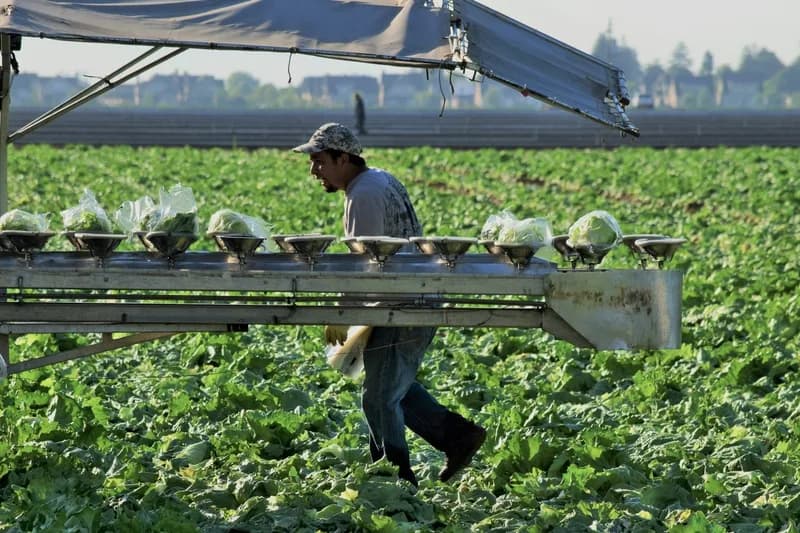
Much of the surge traces to a single multistate outbreak tied to processed iceberg lettuce grown in central Mexico. The FDA and CDC have linked that cluster to Taylor Farms de Mexico, of Guanajuato, whose lettuce reached consumers through Taco Bell restaurants and Walmart stores. The cluster alone accounted for 10,930 illnesses across 17 states as of August 20.
At least 454 people have been hospitalized in that cluster, and two people in Michigan have died, according to the CDC and the FDA. Both had significant underlying health conditions, the FDA said, and both fell ill before the recall. Illnesses linked to the outbreak began on June 14, and the most recent reported onset was August 11.
Taylor Farms de Mexico began a voluntary recall of the lettuce on July 17. It covered Marketside-brand iceberg salad and shredded lettuce sold at Walmart in 15 states, with best-by dates from July 18 to August 3, and extended to all iceberg lettuce the company sourced from central Mexico for foodservice and retail. Recalled products went to 31 states between June 29 and July 16 and may have reached nine more, the FDA said. Most of the illnesses began before the recall took effect.
The case against the lettuce rests on traceback records and patient interviews rather than a laboratory match. Michigan health officials analysed food histories from 190 patients who had eaten at Taco Bell, and 90% of them reported eating iceberg lettuce. No product sample has tested positive for Cyclospora, and on July 19 the FDA said a positive result from a border sample was a false positive that did not change its conclusions.
Where the cuts land
The outbreak has spread after the Trump administration cut funding and staff across the federal food-safety agencies over the past year. Food-safety specialists told NPR the reductions have weakened what they call the ground game against Cyclospora at every level, from county health departments to the federal offices that fund most of the country's food-safety programs.
I think that that has really pushed us into a new level of vulnerability in terms of our food safety system.
Mayne said teams responsible for public-awareness campaigns and for coordinating crisis response with counterparts in other countries had been eliminated in the cuts. In a statement to NPR, the Department of Health and Human Services said staff in its Human Foods Program who work with foreign regulatory counterparts had been reinstated, and that the CDC laboratory supporting the Cyclospora response was not affected by the reductions. The FDA said it deploys personnel where they have the greatest public health impact.
One tool that would ordinarily help gauge the outbreak's true size no longer exists.
A surveillance gap
The CDC last year made reporting optional for Cyclospora and five other pathogens in FoodNet, its active surveillance network, for data collected from July 1, 2025. FoodNet still runs, covering about 16% of the population. The agency says the network was never designed to detect outbreaks, and that nothing has changed in how outbreaks are found and investigated. What the narrowing removed, former CDC official Daniel Jernigan said, was the steady year-on-year measure of whether foodborne illness is getting worse.
Without that data, the true trajectory of the 2026 season is harder to read. States may report higher case counts than the CDC because they include illnesses that do not meet the agency's formal reporting criteria, which leaves the national tally and the state numbers out of step and complicates any effort to size the outbreak in real time.
Free. One click to unsubscribe.
The confirmed count almost certainly understates the outbreak. Food Safety News, a trade outlet, has reported that as many as 83 infections go undetected for every diagnosed case, a ratio it does not source and one that would imply well over a million illnesses.
Confirmed patients this year range in age from 1 to 99, with a median of 46, and 57% are female.
States absorb the strain
Kentucky's Cabinet for Health and Family Services told NPR its food-safety staff is down 30 to 50%. In West Virginia, about half of all food-safety posts are vacant. Recalled lettuce reached Taco Bell locations in Kentucky, Indiana, Michigan, Ohio and West Virginia, the states where the restaurant chain served the product.
Not every state described the same pressure. The Ohio Department of Health said in an emailed statement that its Cyclospora response was unaffected by staffing cuts, a contrast that reflects how unevenly the federal reductions have reached state and local programs.
Michigan has the nation's highest caseload, reporting 14,277 cases and 335 hospitalizations as of August 20. That state figure is not directly comparable with the national total, because Michigan counts probable as well as laboratory-confirmed cases and the CDC counts only confirmed ones. Michigan was also one of 23 states and the District of Columbia that challenged the administration's grant terminations. On July 21 Judge Indira Talwani ruled for the states, holding that agencies cannot cancel awarded grants simply because their priorities later changed. The suit was brought by Attorney General Dana Nessel and was not specific to food safety. The state's health department said the ruling allows disease surveillance, investigation, reporting and public messaging to continue for now.
Tracing the lettuce
The FDA has begun an on-site inspection of Taylor Farms' lettuce operation in Mexico, and its investigation remains open. The agency has said all recalled iceberg lettuce connected to the outbreak is off the market, though the source of the contamination has not been publicly identified. FDA testing of product and produce at the southern border is continuing.
The Taylor Farms cluster is not the only one under review. The CDC said it and the FDA are investigating at least six other clusters whose sources have not been confirmed, and states have been added to the multistate count as traceback work proceeds. Maine and Massachusetts were the most recent additions, on August 13; no states were added in the August 20 update.
Fewer people to respond
Public health experts warn that foodborne illness is rising even as it grows harder to trace and to contain. The people who ran awareness campaigns and coordinated crisis response during past outbreaks are among those the agencies have shed, leaving fewer hands for the work of tracking cases and warning the public before more people fall ill.
It's the only way that you really have a stable estimate of: Are things getting worse or not.
Jernigan worked at the CDC for three decades before resigning. He was describing FoodNet, whose elimination stripped away a stable measure of whether foodborne illness is worsening from one year to the next, precisely the comparison the record 2026 numbers now invite.
The 2026 season runs through August 31, and the CDC said it is working with states to update the count as more cases are confirmed. The median date of illness onset so far is July 7, with the earliest cases dating to May 1 and the most recent to mid-August, well within a season that still has more than a week to run.
How many people the outbreak has actually sickened may never be settled.
What is still unknown
The FDA has not said when its inspection of the Mexican operation will conclude or whether it will trace the contamination to a specific field or step in processing. The recalled products carried best-by dates that have now passed and should no longer be on shelves. The broader question, how deeply the cuts have set back the response, is unlikely to be answered while the outbreak is still under way.
More from Threadline News
 HealthHalf of prostate focal therapy falls outside guidelines, study finds22 Aug 2026
 HealthFDA approves the first mRNA flu shot after refusing to review it10 Aug 2026
 HealthHead Start rule strips federal standards and adds new mandates8 Aug 2026
 HealthPublic Citizen says Medicare delayed Creon price talks by seven years7 Aug 2026
 HealthUS moves to decertify Kentucky organ group Network for Hope6 Aug 2026
 HealthSenate panel sends Fauci contempt referral to Justice Department6 Aug 2026
Free. One click to unsubscribe, in every email. We do not sell or share addresses: privacy.
The Numbers
AllOfficial series, each dated to the observation it comes from.
Federal Reserve Bank of St. Louis