Rhabdomyolysis killed NYC Marathon runner, Rachel Apa's father says
The 24-year-old collapsed two miles from the finish; the account comes from her family.
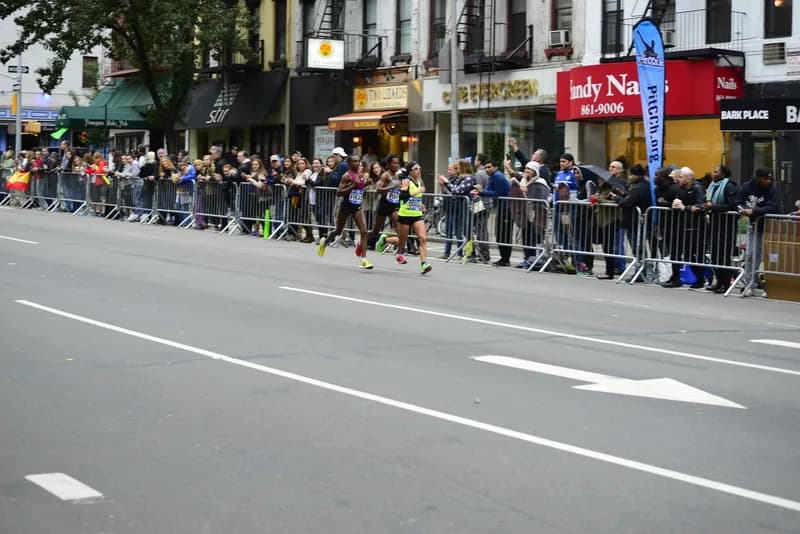
Rachel Apa, a 24-year-old running her first marathon, died at Mount Sinai Medical Center on Sunday night, hours after she collapsed in Central Park about two miles from the New York City Marathon finish line.
Her father, Steve Apa, told The New York Times that doctors attributed the death to rhabdomyolysis, an uncommon condition in which skeletal muscle breaks down rapidly and releases harmful substances into the bloodstream. She was pronounced dead at 9:40 p.m., after six hours of treatment.
Apa was running for the Parkinson's Foundation Champions programme, raising money for research into the disease that killed her grandfather in 2022. A Bucknell University graduate who played field hockey there, she had trained for months and had never run 26.2 miles before Sunday.
What happened in the park
Apa collapsed while running through Central Park at around 1:30 p.m. on Sunday, The New York Times reported. Michaela Nicholas, a hospital social worker watching the race, ran to her and could not find a pulse. Two doctors among the spectators then took turns performing CPR, she told the paper. Marathon medical staff arrived with a defibrillator, the race organiser New York Road Runners said.
We are deeply saddened by the death of one of our runners following yesterday's race. Our thoughts and sincere sympathies are with the runner's family, friends, and the entire running community.
Nicholas said she held Apa's hand as the doctors worked, hoping the runner would understand that someone was there with her.
Paramedics took Apa to Mount Sinai Medical Center by ambulance, where she was in critical condition for several hours. Doctors spent six hours trying to save her, her father said, before she died that night.
Her mother, Michelle, had watched her pass Mile 14 in Queens and filmed her smiling. Making her way toward Central Park to see the finish, she checked the marathon's tracking app and found that her daughter had stopped moving at Mile 24. She reached the scene as Apa was being lifted into an ambulance, then followed in a second one.
What rhabdomyolysis does
Rhabdomyolysis is the rapid breakdown of damaged muscle tissue, which releases the contents of muscle cells into the bloodstream. Those substances can reach vital organs, and the kidneys are the most exposed to them. The condition is relatively uncommon, and it can become life-threatening without timely medical attention, according to the Cleveland Clinic.
About 26,000 people in the United States develop it each year, the clinic says. Extreme physical exertion, prolonged strenuous exercise, muscle injuries and heat-related stress are among the things that can set it off, and the substances released can lead to serious complications, particularly in the kidneys.
The annual figure counts cases from every cause. It does not say how many arise from endurance exercise, or how many prove fatal, and no breakdown of that kind has been attached to Apa's case in any public account of her death.
Apa's text messages to her father are the only public record of how she felt on the course. At Mile 18 she sent a single word, "Ow." A mile later came another, "Ow ow." Her message at Mile 23 read, "final stretch." They record pain, and nothing about what was causing it.
Free. One click to unsubscribe.
Steve Apa was following the race from the family's home in Lewisberry, Pennsylvania, watching his daughter's position on the marathon app and sending her encouragement as she moved through the course.
The messages he sent after Mile 23 went unanswered.
What the organisers said
New York Road Runners, which organises the New York City Marathon, said Apa was the first participant to die during the race since 2024. The statement it issued the day after Sunday's race offered sympathy to her family, her friends and the running community, and said nothing about a cause.
Another fatal collapse at a Road Runners event in Central Park came in 2007, when Ryan Shay, a five-time United States national champion, died during the Olympic marathon trials, which the organisation staged the day before that year's New York City Marathon.
Sunday's race had 61,146 finishers, by the organisers' provisional count, making it the largest marathon ever run, a record the event has now set for three consecutive years. Apa reached Mile 24 of the 26.2-mile course.
The organisers did not say whether the medical response on the course would be reviewed. Their statement did not address what treatment Apa received before paramedics reached her, or what her condition was when the defibrillator arrived.
The only public description of the cause is her father's account of what doctors told him.
Who Rachel Apa was
Apa was 24 and had graduated from Bucknell University, where she played field hockey. Her parents live in Lewisberry, Pennsylvania; her mother travelled to New York to watch the race, and her father followed it from home.
She worked as a product manager at an electrical components company while studying for an MBA at Charleston Southern University.
Her grandfather died of Parkinson's disease in 2022, and his influence on her love of sport and movement was part of why she ran for the Parkinson's Foundation Champions programme, which raises money for research into the disease.
The New York City Marathon was her first attempt at the distance, and she had spent months preparing for it. She was in good spirits through the early stages, still smiling when her mother filmed her at Mile 14, and her family has described the race as carrying a personal meaning for her.
Steve Apa told The New York Times that his daughter's death was unfathomable. "Perfect health, perfect shape, 24 years old," he said.
What is not established
No public account describes whether Apa had an underlying condition, or whether she sought help on the course before she fell. Her father's description of rhabdomyolysis rests on what doctors at Mount Sinai told the family, hours after a collapse that two spectator doctors and the race's own medical staff had already treated.
The Cleveland Clinic's figure of about 26,000 cases a year is national and covers every cause. It carries no rate for runners and no measure of how many cases that begin during a race end in death. Nothing published about Apa's case supplies one either.
What is documented is a collapse in Central Park on Sunday afternoon, CPR from spectators, six hours of treatment at Mount Sinai, a death at 9:40 p.m., and a diagnosis her family passed on from her doctors.
More from Threadline News
 HealthInvestigators recover kratom at both Ole Miss death scenes25 Sep 2026
 HealthCoast Guard hoists hypothermic hiker Craig Berg off Isle Royale15 Sep 2026
 HealthEast Greenbush police find Dominick Bianchi dead in wooded area14 Sep 2026
 HealthPanorama Produce recalls mangoes sold at Walmart over Salmonella1 Sep 2026
 HealthHalf of prostate focal therapy falls outside guidelines, study finds22 Aug 2026
 HealthUS cyclosporiasis cases reach 15,716, over 13 times last year's total21 Aug 2026
Free. One click to unsubscribe, in every email. We do not sell or share addresses: privacy.
The Numbers
AllOfficial series, each dated to the observation it comes from.
Federal Reserve Bank of St. Louis