FBI, DHS and TSA warn airlines of Al Qaeda hijack calls
The joint bulletin flags insider risks and names no specific plot, days before Thanksgiving travel.
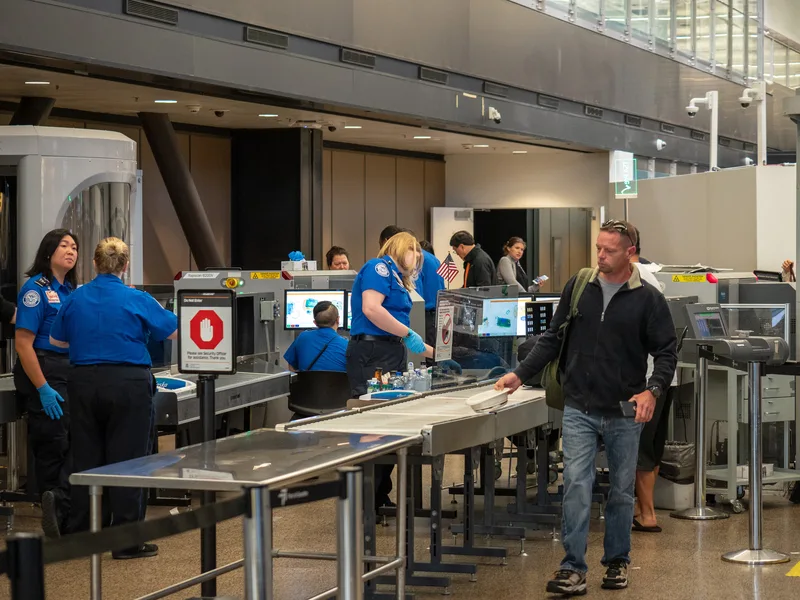
The FBI, the Department of Homeland Security and the Transportation Security Administration warned US airlines, cargo carriers and airports on Thursday that Al Qaeda affiliates are urging attacks on commercial aircraft, days before the Thanksgiving travel rush.
The joint advisory went out on November 19 to commercial airlines, air cargo carriers and airports nationwide. A law enforcement source told CNN, which first reported the document, that investigators know of no specific and credible threat underway, and that notices of this sort are sent to industry as a matter of routine.
The messages the agencies describe come from Al Qaeda affiliates and supporters and praise the attempted hijacking of a Flydubai jet bound for Tel Aviv in September. Several present the attempt as a model for getting past aviation security and urge attacks on American, Israeli and Jewish targets. The messaging restates long-standing Al Qaeda themes about exploiting access to the aviation sector and using commercial aircraft as weapons.
What the bulletin asks for
The report asks aviation staff to watch for people who try to evade security procedures, who ask for detailed information about flight operations or security without a legitimate business reason, or who show unusual insistence on handling certain items of luggage themselves. It also lists the unexplained disappearance of airline radios, access badges and uniforms. The indicators describe behavior rather than any named person or group.
The red flags are aimed at people who already hold credentials for aircraft and secure airport areas, not at passengers standing in the screening line.
People inspired by foreign terrorist organizations have not historically mobilized to violence in direct response to calls like these, the bulletin says, but it warns that they have shown they can mobilize rapidly and with little or no warning. Continued fighting in the Middle East could deepen grievances against the United States, the document adds.
No new passenger screening requirements have been introduced because of the advisory. Federal law enforcement officials said the notice was meant to increase awareness across the aviation industry rather than announce an imminent attack.
No public account has established that Al Qaeda directed the Flydubai attempt. Early Israeli findings indicated that the attacker was likely acting alone, CBS News reported.
The document is an informational report, the label the agencies use for intelligence passed to industry. Advisories of that sort let airline and airport personnel review existing procedures, recognize concerning behavior and contact law enforcement before a threat develops. They go out even when no attack has been identified.
The flight behind the warning
The attack at the center of the advisory happened on September 30 aboard Flydubai flight FZ1073, which was flying from Dubai to Tel Aviv. As the Boeing 737 approached Israel, the co-pilot allegedly attacked the captain in the cockpit with the aircraft's emergency crash axe and tried to bring the jet down.
The 737 was carrying 174 passengers, Outlook India reported, and dropped more than 14,000 feet in under 30 seconds, according to Flightradar24 data. The injured captain, Indian national Smit Machchhar, managed to open the cockpit door, and passengers and crew overpowered the co-pilot. Two off-duty pilots on board took the controls and made an emergency landing at Tabuk, in Saudi Arabia, CBS News reported.
Everyone on board survived the flight. The Israeli prime minister, Benjamin Netanyahu, said afterward that the captain's resistance had prevented a major disaster.
Free. One click to unsubscribe.
The United Arab Emirates' top prosecutor later called the episode an attempted terrorist act, and Israel has since moved to tighten vetting of foreign airline crews.
The indicators point at insider threats: people with access to aircraft, restricted airport facilities or sensitive operational information. The September attempt was carried out from inside the cockpit by a crew member. The advisory is addressed to the people who run and staff airports and airlines.
The agencies also pressed airline personnel, airport authorities and federal security agencies to coordinate with one another when suspicious activity turns up.
Six million expected on flights
AAA expects about six million people to travel on domestic flights between November 24 and November 30, one of the busiest travel stretches of the year for US airlines.
Police K-9 teams and officers carrying rifles were seen near the ticket counters at Houston's Hobby Airport on Friday, November 20, KHOU reported, while check-in moved normally. Airport police departments and the TSA routinely use armed officers and explosives-detection canine teams as part of their existing security duties.
Nothing in the advisory sets a new rule for passengers at a checkpoint, and the agencies have not asked travelers to do anything differently.
What the agencies have not said
Rather than naming an airport or a flight believed to be under threat, the advisory sets out behaviors for security personnel to recognize and report to law enforcement. Which Al Qaeda affiliates released the messages, when they appeared and how many there were has not been made public. No carrier or airport has publicly described a change to its own procedures since the notice went out.
Items of concern picked up by the US intelligence community are routinely shared with private industry, the law enforcement source told CNN.
Who is investigating the attack
Outlook India reported that Omani authorities examined alleged radical Islamist views linked to the co-pilot, a 29-year-old Omani named in news reports as Hamam al-Hammami. The motive behind the attack remains under investigation. India's National Investigation Agency registered a case on October 9 over the attack on the Indian captain, its first information report describing an apparent attempt to hijack the aircraft or cause it to crash.
Earlier Outlook India reports said UAE authorities alleged the co-pilot planned a suicide attack on the Tel Aviv flight, and that investigators believed the plan was modeled on the September 11 hijackings. The same outlet reported that he had faced a flying ban in Oman over extremist views.
The advisory says extremist groups have used the September incident in propaganda urging supporters to target commercial aviation and exploit weaknesses in airport security. Responsibility for that security is divided among federal agencies, airport operators, air carriers and local law enforcement organizations. TSA personnel oversee passenger screening.
Officials were still saying on November 21 that they knew of no specific threat.
The bulletin itself is not a public document, and its contents are known from a copy obtained by CNN. The FBI, DHS and TSA have announced no further measures since it went out on Thursday, and no agency has published the text.
The Flydubai investigation now runs across the UAE, Oman, Israel and India, and none of those governments has issued a public finding on the co-pilot's motive.
More from Threadline News
 PoliticsICE lodges detainer against man charged in United cockpit case11 Nov 2026
 PoliticsSUV kills three people outside North Hollywood Metro station11 Nov 2026
 PoliticsSecret Service arrests driver and fence jumper near White House10 Nov 2026
 PoliticsDriver, 76, charged with felony death by vehicle in Wake County crash8 Nov 2026
 PoliticsFive federal agencies warn of attacks on freezer controls6 Nov 2026
 PoliticsLaKesha Womack unseats Tim Moore with felony charge pending6 Nov 2026
Free. One click to unsubscribe, in every email. We do not sell or share addresses: privacy.
The Numbers
AllOfficial series, each dated to the observation it comes from.
Federal Reserve Bank of St. Louis