Amazon raises Echo Dot price 60% overnight, citing memory costs
Amazon raised device prices overnight, citing memory and storage costs across consumer electronics.
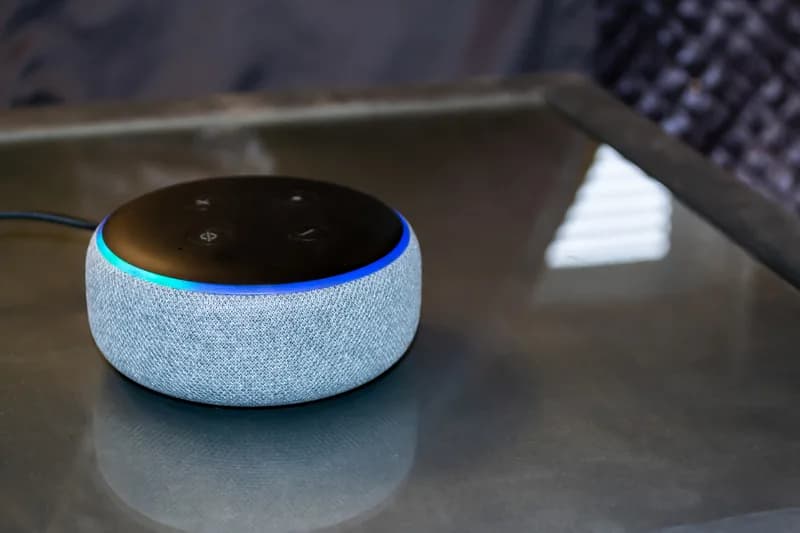
Amazon raised prices overnight across its Echo, Kindle, Fire TV and eero hardware lines, with the base Echo Dot jumping 60 percent to $79.99, and blamed rising memory and storage component costs.
The changes were confirmed by an Amazon spokeswoman and documented in a review by Fortune, which reported them on Aug. 21. Amazon did not tell shoppers in advance, and it left its Ring cameras and doorbells at their previous prices while nearly every other first-party device line moved up in the space of a single night. The increases reach smart speakers, e-readers, streaming sticks and home networking gear.
The new prices
The Echo Dot rose $30, from $49.99 to $79.99, a 60 percent increase. The Echo Show 11 climbed $30 to $249.99. The 16-gigabyte Kindle went from $109.99 to $149.99, and the 16-gigabyte Kindle Paperwhite from $159.99 to $199.99, each a $40 increase, according to Fortune's review of the listings.
The consumer electronics industry is facing significant increases in memory and storage component costs. After absorbing these increases for as long as we could, we recently adjusted pricing across our product lines
The Fire TV line moved least at the bottom of the range and most at the top. The Fire TV Stick HD rose $5 to $39.99, a modest change, while the Fire TV Stick 4K Max jumped $25 to $84.99, roughly a 42 percent increase on the most capable streaming stick Amazon sells.
Amazon's eero networking gear absorbed the steepest dollar increases. The eero 7 mesh system went from $349.99 to $399.99, a $50 rise, and the eero Pro 7 climbed $100 to $799.99, the largest dollar increase in the listings Fortune reviewed and a sign the increases reached the priciest hardware, not only the entry models.
The Kindle Scribe, already the most expensive reader in the range, was left alone. The rest of the line moved: the Paperwhite Signature Edition rose $50 to $249.99, and the basic Kindle now sells for $149.99 with advertising and $169.99 without, according to Goodereader, leaving the reader range with a new floor well above last year's.
The company did not say when, or whether, the increases would be reversed.
A low-cost reputation tested
Amazon has for years sold its devices cheaply to pull customers toward its services and its store, treating inexpensive Echo speakers and Kindles as an entry point rather than a source of profit. The overnight increases cut against that history, and they come ahead of a fall event at which the company is expected to introduce new hardware. Amazon has not set a date for that event, and whether the new devices launch at the raised prices is not known.
we will still not have enough capacity to meet all the demand we have in 2026, and I believe this dynamic will also be true in 2027
Jassy told investors in late July that the same component costs now pushing device prices up are also reshaping Amazon's spending plans. He said the company expects $220 billion in capital expenditures this year, up from an earlier estimate of $200 billion, with the increase driven largely by memory-related data-center costs.
Most of that money is going to data centers built to run artificial-intelligence services, which depend on the same memory chips now in short supply. Jassy said the higher spending still would not close the gap between capacity and demand this year, and he expected the same strain to continue into 2027. The company's device business competes for parts against that build-out.
Where the chips are going
Memory has become the pinch point of the AI build-out. The chips that hold data for large models are drawn from the same supply that feeds phones, laptops, tablets and smart speakers, and demand from data centers has tightened what remains for consumer devices, raising the cost of parts that go into products selling for well under $100. Amazon buys those chips at both ends of its business.
Free. One click to unsubscribe.
Amazon Web Services reported $42.2 billion in revenue in the second quarter, up 37 percent from $30.9 billion a year earlier.
That was the cloud unit's fastest growth in 18 quarters and its fifth straight quarter of accelerating gains. The expansion is what drives Amazon's capital spending, and the capital spending is what competes with Echo and Kindle production for the same components, putting the company's fastest-growing business in direct tension with the cheap products that first brought many customers in.
The more Amazon builds for AI, the less slack there is in the parts that make its cheapest gadgets cheap.
The household math
For a household, the changes land unevenly. A shopper replacing a single Echo Dot now pays $30 more than a buyer a year ago, while a family setting up mesh networking with the eero Pro 7 pays $100 more than before, and a reader upgrading to a Paperwhite Signature Edition pays an extra $50. The smallest change, on the Fire TV Stick HD, is $5.
The steepest percentage increase falls on the cheapest item. The Echo Dot's 60 percent jump is larger in proportion than any other change in the range, and it lands on the product Amazon has most often used to bring first-time buyers into its ecosystem, where cheap hardware leads to paid services.
Prices changed without notice
The increases took effect overnight and were not announced to consumers before they appeared on Amazon's storefront. Price rises on the Fire TV line were first reported by the website Pocket-lint, before Fortune documented the broader move across Amazon's Echo, Kindle, Fire TV and eero hardware. Shoppers encountered the new figures without warning.
An industry-wide squeeze
Amazon framed the increases as an industry problem rather than a company decision. Its spokeswoman tied the moves to memory and storage costs affecting consumer electronics broadly, casting Amazon as the latest large technology maker to pass higher component prices along to buyers as chip supply tightens across the sector.
The pressure traces to one source. Companies building AI infrastructure are buying memory in volumes that strain supply, and device makers that rely on those chips face higher costs whether or not they operate data centers of their own.
Amazon sits on both sides of that squeeze, buying memory for the AWS data centers that drive its capital budget and buying the same kind of memory for the Echo speakers and Kindles it sells at retail.
The device prices are the visible end of a shortage that begins in the server room.
What Amazon has not said
Amazon has not detailed how long the higher prices will hold, whether new devices shown at the fall event will launch at the raised levels, or how much of each increase reflects added cost rather than margin. The spokeswoman's statement addressed the cause of the changes, but not their duration or how far they might go.
No regulatory filing accompanied the price changes, which Amazon made through its own storefront rather than a public disclosure. The figures in this account come from Fortune's review of the listings and from Goodereader's tracking of the Kindle range as the new prices went live.
The fall event, where Amazon typically introduces its newest Echo, Fire TV and Kindle models, will be the next test of whether the higher prices are a temporary response to component costs or a new floor for its hardware.
More from Threadline News
 BusinessSpent SpaceX rocket carves 60-foot crater on the Moon19 Aug 2026
 BusinessTreasury yields hit a 19-year high as debt supply meets thinner demand19 Aug 2026
 BusinessTrump pauses 50% tariffs on $20 billion in Canadian goods19 Aug 2026
 BusinessMortgage rates near 7% as 30-year Treasury yield tops 5.32%18 Aug 2026
 BusinessFrasers rescues Harvey Nichols in pre-pack deal, saving 1,000 jobs17 Aug 2026
 BusinessCourt filings tie Anthropic's book purchases to AI training16 Aug 2026
Free. One click to unsubscribe, in every email. We do not sell or share addresses: privacy.
The Numbers
AllOfficial series, each dated to the observation it comes from.
Federal Reserve Bank of St. Louis