China fines Evergrande companies $2.35 billion, jails Hui for life
Hui Ka Yan pleaded guilty to eight charges and was stripped of his political rights for life.
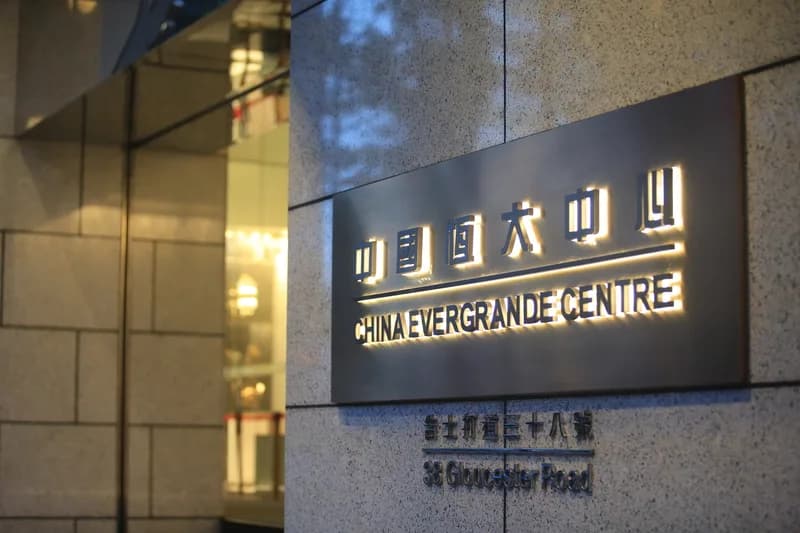
Hui Ka Yan, the founder of China Evergrande, was sentenced to life in prison on Aug. 20 for financial fraud, ordered to forfeit all his personal property and stripped of his political rights for life by a court in the southern city of Shenzhen.
| Group liabilities at default | $300 billion |
| Creditor claims filed | $45 billion |
| Combined court fines | 15.82bn yuan ($2.35bn at 6.72/USD, Aug 20 2026) |
| Assets sold in liquidation | $255 million |
As filed
The Shenzhen Intermediate People's Court also fined China Evergrande Group 8.82 billion yuan and its main onshore unit, Hengda Real Estate Group, rendered Evergrande Real Estate Group in the court's official English, 7 billion yuan. The 15.82 billion yuan total is about $2.35 billion at the Aug. 20 rate of 6.72 yuan to the dollar, among the largest corporate criminal penalties handed down in a Chinese case. The ruling, carried by state broadcaster CCTV and the Xinhua news agency, closes a criminal investigation that opened after the developer collapsed under more than $300 billion in liabilities.
What the court found
Hui, 67, pleaded guilty in April to eight charges: illegally taking public deposits, fundraising fraud, illegally extending loans, fraudulently issuing securities, illegal disclosure of important information, corporate bribery, misuse of funds and misappropriation of company property. The court found that he had inflated the group's assets and concealed its liabilities, and that he had abused his position to misappropriate company funds over several years.
Investigators in mainland China and Hong Kong concluded that Evergrande had booked revenue from apartment sales before the units were finished and handed to buyers, an accounting trick that flattered its results. Regulators put the overstatement at more than 560 billion yuan, about $78 billion at 2024 rates, across 2019 and 2020. The violations by Evergrande, its Hengda Real Estate unit and Hui ran from 2016 to 2021, the court said.
Fifty-six other people connected to Evergrande were sentenced the same day by the Shenzhen Intermediate People's Court and the Shenzhen Nanshan District People's Court, to terms of 22 months to 18 years, the Xinhua agency reported. Among them were Hui's two sons, Xu Tenghe and Xu Zhijian, along with senior executives convicted on charges that included illegally taking public deposits and fundraising fraud.
Hui had not been seen in public since Chinese authorities detained him in 2023.
Beijing began curbing heavy borrowing across the property sector in 2020, triggering a cash crunch among developers, and Evergrande stopped paying its debts the next year. Police took Hui away in September 2023 and held him under residential surveillance at a designated location, a measure that falls short of formal detention or arrest, and the High Court of Hong Kong ordered the company into liquidation on January 29, 2024 after creditors filed a winding-up petition.
Little left for creditors
Liquidators had sold about $255 million of assets and logged 187 creditor claims totalling $45 billion as of July 31, 2025, the most recent progress report they have published. They caution that the claims figure is not final and remains subject to adjudication.
Reuters has described the recovery as moving at a glacial pace. The liquidators themselves call the work a painstaking and time-consuming exercise, and say they are making every effort to proceed swiftly. Outside mainland China they are fighting in court to freeze offshore assets held by Hui and his former wife, Ding Yumei, part of an effort to claw back $6 billion in dividends and pay to the founder and other former executives. A Hong Kong court widened that freeze in November 2025 to cover holdings in Canada, Gibraltar, Jersey and Singapore.
The amount involved is exceptionally large, the circumstances are particularly egregious, and extraordinarily heavy economic losses have been caused. The harm to society is extremely serious.
Hui had faced regulatory sanction well before the criminal case. In 2024 the China Securities Regulatory Commission fined him 47 million yuan, about $6.5 million at the rates of the day, and barred him from the country's securities markets for life after finding that Hengda had inflated earnings and committed securities fraud. Evergrande's liquidators declined to comment on the sentence.
Free. One click to unsubscribe.
A rise built on debt
Born in 1958 into a rural family in central China's Henan province, Hui worked in the steel industry in the 1980s. He founded Evergrande in 1996 and rode the country's decades-long housing boom to a net worth Forbes put at $45.3 billion in 2017, the highest in Asia at the time. He also gained political standing as a member of the Chinese People's Political Consultative Conference, joining the ranks of businessmen who won influence in Beijing.
At its height the company reached far beyond housing, expanding into electric vehicles, bottled water and theme parks, and bankrolling the soccer club Guangzhou Evergrande. It grew into the world's most heavily indebted developer before the borrowing that fueled that expansion became the crisis that consumed it.
When Evergrande finally reported results in July 2023, after two years of delayed filings, it disclosed combined net losses of 581.9 billion yuan, about $81 billion at 2023 rates, for 2021 and 2022. The losses came from writedowns on properties, land returned to the state, losses on financial assets and financing costs. At its peak the company had some 1,300 projects under development in more than 280 Chinese cities.
New home sales in China fell last year to their lowest level since 2014, according to official statistics.
New residential sales totalled 7.3 trillion yuan in 2025, down from 16.2 trillion yuan at the 2021 peak, according to National Bureau of Statistics data reported by CNN. Official new-home prices have fallen by roughly 20 percent or more since 2021. The slump has drained consumer confidence and weighed on an economy that long treated real estate as a primary source of household wealth and local government revenue.
The crisis is not over
China's property market entered 2026 still contracting, in a lasting shift away from the speculative growth of the boom years. Developers are working through a glut of unsold homes while adjusting to a market in which housing is no longer the country's main store of wealth. The change has reset expectations for buyers and builders alike.
Beijing has issued a run of measures over several years to steady the sector, easing purchase limits and moving to support stalled construction projects. Sales and prices have kept falling despite them, and officials have offered no timetable for a recovery. The downturn has become a drag on the wider economy.
For Chinese authorities, the verdict serves as a capstone to a years-long push to hold accountable those blamed for the property bubble's collapse. The South China Morning Post described the penalties as among the biggest corporate fines ever levied by a Chinese court in a criminal case, and CNN called them some of the largest corporate criminal fines ever handed down by the Chinese government.
Edward Chan, a director at S&P Global Ratings, told the South China Morning Post that he did not anticipate further meaningful impact on the Chinese property market following the sentencing, in a market where Evergrande is already in liquidation.
Therefore, severe punishment should be given in accordance with the law.
The company Hui built has been taken apart through the courts, its founder imprisoned and its assets scattered among creditors who will recover a fraction of what they are owed. What remains is a market still absorbing the losses and a government still searching for a floor beneath prices.
What happens next
The liquidation will continue regardless of the sentence, with administrators pursuing offshore holdings and contesting claims that dwarf what has been recovered. Reuters reported that it could not reach legal representatives for Hui, who has not appeared in public since he was detained.
For millions of Chinese households whose savings were tied up in unfinished apartments, the sentence settles a question of blame without returning their money. The wider market is left to absorb a surplus of homes and a level of demand that official figures show is still shrinking three years after the default.
More from Threadline News
 BusinessSpent SpaceX rocket carves 60-foot crater on the Moon19 Aug 2026
 BusinessTreasury yields hit a 19-year high as debt supply meets thinner demand19 Aug 2026
 BusinessTrump pauses 50% tariffs on $20 billion in Canadian goods19 Aug 2026
 BusinessMortgage rates near 7% as 30-year Treasury yield tops 5.32%18 Aug 2026
 BusinessFrasers rescues Harvey Nichols in pre-pack deal, saving 1,000 jobs17 Aug 2026
 BusinessCourt filings tie Anthropic's book purchases to AI training16 Aug 2026
Free. One click to unsubscribe, in every email. We do not sell or share addresses: privacy.
The Numbers
AllOfficial series, each dated to the observation it comes from.
Federal Reserve Bank of St. Louis