Meta's 'problematic use' label undercounted teen harm, witness testifies
Arturo Béjar told the court the label undercounted what academic literature treats as addiction.
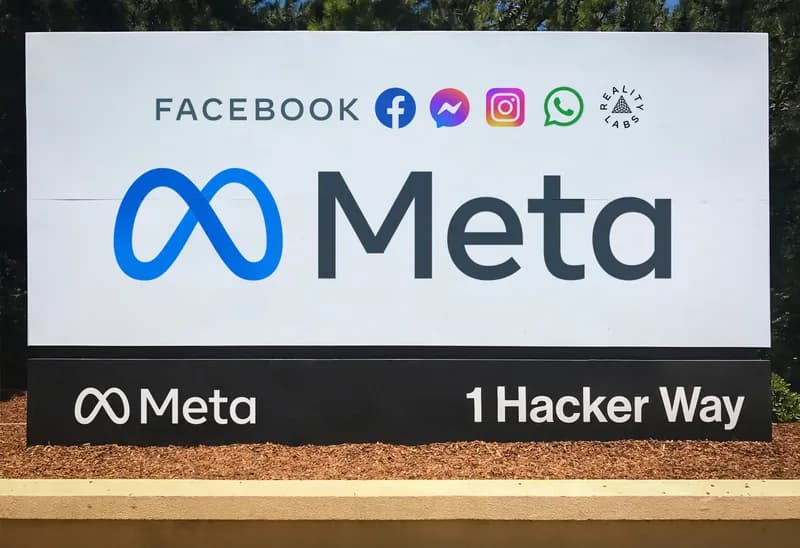
A former Meta safety engineer told a federal court in Oakland this week that the company's shift from 'addiction' to 'problematic use' undercounted teen harm, and that protective features he worked on were 'designed to fail.'
Arturo Béjar was the first witness in the trial, which opened Tuesday in federal court in Oakland, California, before U.S. District Judge Yvonne Gonzalez Rogers. Thirty-three states filed the case in October 2023 and 29 remain; the claims are being argued by lawyers for California, Colorado, Kentucky and New Jersey. The eight-member jury is advisory, and the judge will decide liability and remedy. He testified Tuesday and returned to the stand Wednesday.
The states accuse Meta of designing Facebook and Instagram to hook young users and keep them scrolling, fueling anxiety and depression and, in the states' account, contributing to some suicides, while misleading consumers about the risks. The case targets the features Meta built, not the content that appears on the platforms.
What the states want
In a court filing, the state attorneys general asked for permanent injunctive relief on a nationwide basis, rather than state by state, to stop what they call Meta's unlawful practices. If the company is found to have violated the federal Children's Online Privacy Protection Act, they want Meta to delete all personal data for children under 13, along with the algorithms and models trained on that information.
They have the ability that private plaintiffs typically do not have to actually force these companies, through the court system, to change their business model, their design decisions, all of that.
California Attorney General Rob Bonta, who is co-leading the case, told NPR before the trial that he believes Meta can redesign its products to be less harmful and still succeed as a business. He described the stakes as higher than in earlier cases, predicting another loss that would force the company to change, and said the states want Meta to 'stop hurting our kids.'
On the day opening arguments began, campaigners and bereaved parents stood outside the Ronald V. Dellums Federal Building in Oakland holding a banner bearing the names of young people they say died from the effects of social media. Families and advocacy groups put the number at close to 400; the Associated Press, which photographed the banner, did not give a figure.
The addiction label
During his second stint at Meta, from 2019 to 2021, Béjar testified, the company replaced the word 'addiction' with 'problematic use' in its internal work. He told the court the label 'undercounted what in some academic literature is considered to be addiction,' and that Meta then published the lower numbers as evidence of safety.
Internal studies he reviewed documented children encountering harmful material at elevated rates, including recommendations that surfaced content from sexual predators and graphic violent images, he said. Béjar testified that he raised those findings with Facebook and Instagram executives on multiple occasions and saw little meaningful change. Asked about the company's attitude to users under 13, he said the approach on Instagram in particular was 'don't ask, don't tell.'
Béjar said he emailed Chief Executive Mark Zuckerberg on October 5, 2021, the same day Zuckerberg publicly stated that Meta does not put profit ahead of safety. He estimated he had briefed Zuckerberg on product issues at least 100 times over his years at the company, though one account of his testimony puts the figure at dozens.
The email followed a widely shared Facebook post Zuckerberg wrote in 2021, after the whistleblower Frances Haugen gave internal documents to The Wall Street Journal that detailed risks to teenagers' mental health. In that post, Zuckerberg said it was 'just not true' that Meta prioritizes profit over safety and wellbeing.
Based on my experience at Meta, that is not an accurate statement.
Béjar told the jury that only one person could have changed the company's priorities, and that Zuckerberg did not. He testified that it was 'the company culture that Mark had created' that made it 'practically impossible to deliver features that addressed the wellbeing and safety issues.' Safety, he said, was 'not a meaningful priority.'
On the stand
On cross-examination, Meta attorney Brian Stekloff pressed Béjar on the caliber of his former colleagues and whether he had solved any of the safety problems he identified. Béjar said the teams he worked with were full of qualified people he respected, and that none of the risks had been resolved.
Free. One click to unsubscribe.
He said features such as infinite scroll and video autoplay were 'inherently unsafe for teenagers,' and placed 'like' counters in the same category. Meta's 'Take a Break' tool, he told the court, was 'designed to fail,' and Instagram's 'quiet mode' does little because it is an optional setting rather than a default.
| New Mexico | $375m jury penalties in March, plus a $567m abatement fund ordered in August |
| Los Angeles | $6 million, apportioned 70% to Meta and 30% to Google |
| Oakland, current | Jury trial underway |
As filed
In New Mexico, a jury found in March that Meta had failed to shield minors from sexual predators and had violated state consumer protection law, and set $375 million in civil penalties. After a second phase heard by the judge, Chief Judge Bryan Biedscheid ordered a further $567 million into a five-year abatement fund on August 6, bringing the total to $942 million. Neither figure is damages. A Los Angeles jury separately ordered $6 million in an addiction case, apportioned 70% to Meta and 30% to Google. Meta has filed an appeal in the Los Angeles case and says it will appeal in New Mexico, and it denies the allegations in the current trial.
Meta's account in court
Meta denies the allegations. In his opening statement, attorney Paul Schmidt argued that the company was sensitive to the risks facing teenagers, sought to address them and did not deceive the public. Meta's lawyers also drew on Béjar's own testimony that the company employs hundreds of people focused on safety, including some he considered well-qualified.
What the Meta case could change
The Oakland trial is a test of whether Meta can be held responsible for the design of Facebook and Instagram rather than for what users post. Lawyers watching the case say a loss could force changes far beyond money, reaching into the design decisions and business model that made the two apps among the most used in the world.
Zuckerberg testified in the Los Angeles trial in February 2026, and Instagram head Adam Mosseri took the stand there the week before him. The state attorneys said this week they had not decided whether to call Zuckerberg in Oakland.
Béjar's history with Meta
Béjar worked at Facebook from 2009 to 2015, where he focused largely on cyberbullying, then returned to the company as a consultant from 2019 to 2021 to work on Instagram's wellbeing team. He has said one reason he came back was watching the way his own teenage daughter was treated on Instagram.
In November 2023, he testified before the Senate Judiciary subcommittee on privacy and technology that Meta pushed content to teenagers that promoted bullying, drug abuse, eating disorders and self-harm, and he gave an extensive interview to The Wall Street Journal that year describing his efforts to raise concerns with his employer.
Recounting one young user's experience from the witness stand this week, Béjar told the jury, 'She got a good following, at the price of harm.' He also acknowledged that Meta employs hundreds of people working on safety, a concession the company's lawyers seized on during their questioning.
His account traced the failures he described not to a shortage of staff or expertise, but to a culture he said made safety work impossible to ship.
What happens next
The states are not seeking damages. They want civil penalties, restitution, disgorgement and injunctive relief; Meta has told the court the statutory maximum could reach $1.4 trillion, while the states put about $193 billion on the record at opening. The witnesses still to come include Instagram head Adam Mosseri and Antigone Davis, Meta's head of global safety. The plaintiff attorneys general have compared their approach to the tobacco litigation of the 1990s, which built on whistleblower testimony and internal documents and produced a settlement worth $206 billion over its first 25 years.
Nothing has been decided in Oakland, where the jury has only begun to hear the states' case. Help is available for anyone affected by the issues in this article: the 988 Suicide and Crisis Lifeline takes calls and texts, Crisis Text Line can be reached by texting HOME to 741741, and the ANAD eating disorders helpline is on 1-888-375-7767.
More from Threadline News
 BusinessSpent SpaceX rocket carves 60-foot crater on the Moon19 Aug 2026
 BusinessTreasury yields hit a 19-year high as debt supply meets thinner demand19 Aug 2026
 BusinessTrump pauses 50% tariffs on $20 billion in Canadian goods19 Aug 2026
 BusinessMortgage rates near 7% as 30-year Treasury yield tops 5.32%18 Aug 2026
 BusinessFrasers rescues Harvey Nichols in pre-pack deal, saving 1,000 jobs17 Aug 2026
 BusinessCourt filings tie Anthropic's book purchases to AI training16 Aug 2026
Free. One click to unsubscribe, in every email. We do not sell or share addresses: privacy.
The Numbers
AllOfficial series, each dated to the observation it comes from.
Federal Reserve Bank of St. Louis