Court filings tie Anthropic's book purchases to AI training
Booksellers describe a trade they cannot identify, and the court has already cleared the buying they most object to.
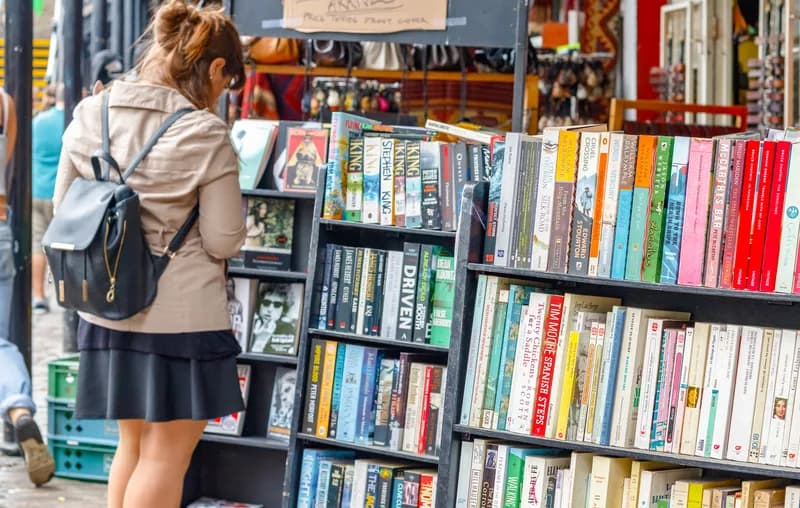
Booksellers in the United States and Ireland say they have been filling anonymous orders for hundreds and sometimes thousands of obscure titles, and court filings in a copyright case against Anthropic point to artificial intelligence firms as the likely buyers.
At Second Story Books in the Washington area, the large orders started at the end of last year and ran to as many as 100 volumes at a time. Most were university press editions, academic texts and general-interest nonfiction, almost all of them published between the 1970s and the 2020s. Zachary Green, who handles special collections there, says he has had no orders for genuinely rare titles, and now reviews every title in a large order before it goes out.
The books share a narrow provenance. They date from after ISBNs began assigning trackable numbers to individual titles, a standard that arrived in 1970, and from before AI systems started generating text of their own. Many are arcane volumes that were neither rare nor valuable, only slow to move, the sort of backlist a shop might keep for a decade before a single copy sells.
The pressure to fill orders
Robert Harper, who runs My Dead Aunt's Books in Hyattsville and sells some 36,000 titles online, said platforms including Amazon, Biblio, Alibris and eBay assign fulfillment rankings to their sellers. A cancelled order, even a partial one, can pull that ranking down, and a ranking that falls too far removes a seller from the platform, taking away the channel a small shop depends on to reach buyers. Harper said he has sold between $30,000 and $50,000 of older academic texts since January.
If I cancel two out of 100 books in an order from Amazon, I will be cut off as a seller. I can't think about it morally or ethically, I have to fill the orders.
The orders have kept Harper's store afloat at a time when the large purchases he once relied on from universities have thinned as campus budgets tightened amid funding cuts. A pattern that began as a nuisance has become a revenue line the business cannot easily turn down. Not every dealer has seen it: the Antiquarian Book Shop in Georgetown, run by Susan Hale, reports no unusual orders at all.
The trade is split over what to do. Susan Benne, executive director of the Antiquarian Booksellers Association of America, says some dealers oppose any sale that could feed an AI model, on principle rather than price. Others point out that nobody in the business has ever had to ask what a buyer intends: when an order comes in, a dealer does not usually want to know what happens to the book afterwards. The association had set up a working group on AI before the destructive-scanning reports appeared.
Orders that arrive overnight
Kennys, a bookshop and online retailer in Galway, has been receiving orders by email in the middle of the night for upwards of 5,000 obscure titles, a volume no ordinary reader assembles. In Berlin orders arrive the same way, worth between 10,000 and 50,000 euros at a time. Dealers in Germany, Switzerland, Spain and the Netherlands have all reported similar approaches.
The industry calls the process destructive scanning. Thousands of physical books at a time have their spines sliced off and their pages digitized, and what is left is destroyed, according to The Irish Times, which described the practice as feeding paper books into the models that sit behind chatbots. The physical copy is spent in the act of turning it into training data.
The columnist Liz Carolan, writing in The Irish Times, argues that building an AI system draws on four inputs: computing power, the work of engineers, energy, and data, most of it the product of human creative labour. Companies have been willing to pay for the first three, she says, and to treat the fourth as something to be taken. On books, at least, Anthropic has paid twice: many millions for print copies, by the court's account, and $1.5 billion to settle the piracy claims.
The judgment that phrase comes from is blunter. Anthropic "could have purchased books, but it preferred to steal them," Judge William Alsup wrote, avoiding what chief executive Dario Amodei called the "legal/practice/business slog." He was describing the pirated libraries the company downloaded in 2021, not the books it later bought from shops. The buying started in 2024, after it stopped using pirated copies.
What the filings describe
The details emerged in Bartz v. Anthropic PBC, a copyright case in the Northern District of California brought by the authors Andrea Bartz, Charles Graeber and Kirk Wallace Johnson. Filings describe an effort called Project Panama. Tom Turvey, who had run partnerships for Google's book-scanning project, was hired in February 2024 and tasked with obtaining all the books in the world. An internal memo in the docket puts it plainly: the aim was to destructively scan all the books in the world, and the company did not want it known that it was working on this.
| Computing power | Yes |
| Technical work | Yes |
| Energy | Yes |
| Data from creative labor | No |
As filed
The project was meant to build what filings called 'a central library of all the books in the world to retain forever,' from which the company could draw 'various sets and subsets of digitized books' to train the large language models behind its AI services.
The court described how Anthropic 'came to value most highly for its data mixes books like the ones' written by the plaintiffs 'because of the creative expressions they contained.' Claude's customers wanted it to write 'as accurately and as compellingly' as those authors, using 'well-curated facts, well-organized analyses, and captivating fictional narratives.'
What Anthropic says
An Anthropic spokesperson said, 'None of our data acquisition programs buy and destroy rare or antiquarian books.' The company drew a line between rare and valuable collectibles, which it said it does not target, and the harder-to-find professional or reference titles that make up much of the bulk buying described by dealers.
What the ruling leaves open
Alsup granted Anthropic summary judgment on two points. Training the models was fair use, and so was converting lawfully bought print books to digital, because it added no new copies and the company had "purchased its print copies fair and square." The pirated digital books were another matter. He refused to treat them as training copies and sent them to trial, and that claim ended in a $1.5 billion settlement, approved in July. The money covers the pirated copies. Nothing was awarded for books scanned from copies the company had bought. Alsup also declined to rule on what the central library was used for beyond training, saying the record was too thin.
The bulk purchases cut both ways for booksellers, clearing inventory that had sat unsold for years while raising the fear that irreplaceable works could be pulped without anyone weighing what is lost.
What the shops cannot say is who, exactly, is buying. The orders arrive anonymously, and neither Second Story nor Kennys has confirmed a purchaser. Reporting has pointed to the catalogue service ISBNdb as an intermediary, and to Better World Books and World of Books among the used-book sellers Anthropic bought from. The link to AI firms rests on the shape of the orders and on the court record, not on a name attached to any one sale.
The economics underneath
The Irish Times column framed the purchases as a shift in the economics of publishing, with physical books turned into an extraction resource for the technology industry. The argument ran that buying and pulping printed copies costs an AI firm less than compensating the writers whose work trains its models, and that the difference is the whole point.
An internal Anthropic memo quoted in the coverage described the goal plainly: 'Project Panama is our effort to destructively scan all the books in the world... we don't want it to be known that we are working on this.'
The ambition set out in the filings, a library of every book to be kept forever, sits oddly against the scenes at the shops filling the orders. A dealer in Washington ships 100 volumes at a time, a shop in Galway thousands, and each order arrives as nothing more than ordinary commerce.
For the dealers, the choice is narrow. Refusing an order to keep books from a shredder risks the platform rankings that decide whether a shop can sell online at all. Some in the antiquarian trade would refuse anyway.
The legal question over purchased-and-scanned books has, for now, been answered in Anthropic's favor. The cultural one has not. Booksellers, authors and their associations remain divided over whether a sale that ends in a shredder is a lifeline for a struggling shop or the quiet loss of the printed record.
Sources for this article
3 sources · Retrieved 16 Aug 2026
More from Threadline News
 BusinessMeta's 'problematic use' label undercounted teen harm, witness testifies20 Aug 2026
 BusinessSpent SpaceX rocket carves 60-foot crater on the Moon19 Aug 2026
 BusinessTreasury yields hit a 19-year high as debt supply meets thinner demand19 Aug 2026
 BusinessTrump pauses 50% tariffs on $20 billion in Canadian goods19 Aug 2026
 BusinessMortgage rates near 7% as 30-year Treasury yield tops 5.32%18 Aug 2026
 BusinessFrasers rescues Harvey Nichols in pre-pack deal, saving 1,000 jobs17 Aug 2026
The Numbers
AllOfficial series, each dated to the observation it comes from.
Federal Reserve Bank of St. Louis