Eli Lilly revenue jumps 48% as Novo Nordisk stumbles
Lilly lifted its 2026 forecast on Zepbound demand as Novo's pipeline setbacks hit its stock.
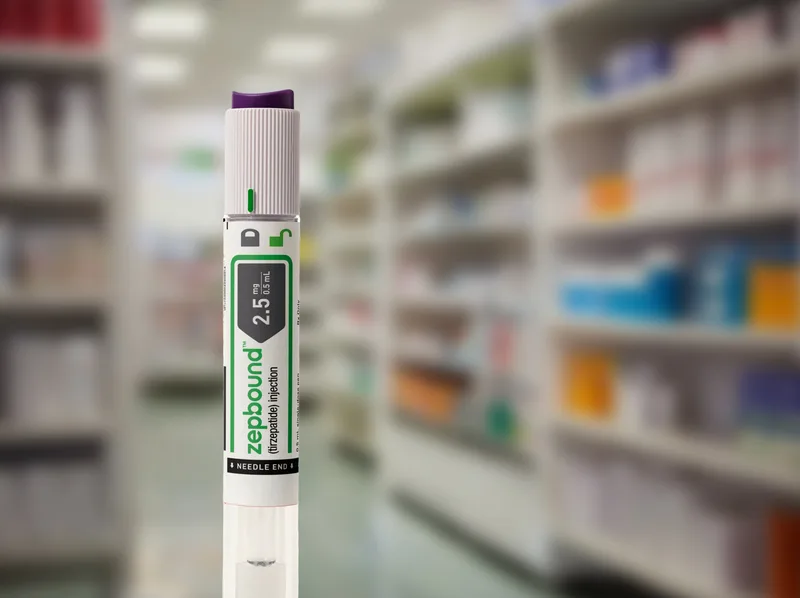
Eli Lilly's second-quarter revenue rose 48% from a year earlier to $23 billion, and the drugmaker raised its full-year sales forecast, as prescriptions for its weight-loss drug Zepbound and diabetes treatment Mounjaro climbed again.
The results, released August 5, cleared Wall Street estimates by a wide margin. Adjusted earnings reached $8.38 a share against the $6.01 that analysts had expected, and revenue topped a consensus near $20.73 billion. It was Lilly's fourth consecutive quarterly beat, and it pushed the company to lift the top of its revenue guidance to $87 billion.
That new range, $85 billion to $87 billion, is up from earlier guidance of $82 billion to $85 billion. Lilly is the only drugmaker with a market value above $1 trillion, a standing that rests on the depth of its GLP-1 franchise and on the stumbles of its nearest rival.
What drove the quarter
Mounjaro, sold for diabetes, generated $9.9 billion in the quarter, a 91% increase, with $4.8 billion of that in the United States and $5.2 billion abroad. Zepbound, the same molecule approved for obesity, produced $4.9 billion in U.S. revenue, a 44% gain over the same quarter last year.
Combined, the two drugs accounted for nearly $15 billion in sales for the quarter. Worldwide volume rose 60% even as prices fell 13%, and Lilly said stronger prescription demand more than made up for the lower net prices.
The quarter was the first to include Foundayo, Lilly's obesity and diabetes pill approved in the United States in April, which brought in $98 million, just short of the roughly $103 million analysts had projected.
Latest · 33 percent
Citi analysis of prescription data
Foundayo reached the market about four months after Novo Nordisk's own Wegovy pill, and it has seen slower early uptake. The Wegovy pill's share of all Wegovy prescriptions has flattened near a third, registering 30%, 32% and 31% in successive weeks before reaching 33% for the week ended June 5, according to Citi. One analyst who surveys prescribers attributed the pill's faster start to familiarity with the Novo brand.
Two companies, two paths
Novo Nordisk, the Danish company behind Ozempic and Wegovy, reported the day before Lilly and also raised its full-year outlook. Adjusted sales rose 7% at constant exchange rates to 78.5 billion Danish kroner, driven by GLP-1 volume growth. Its U.S.-listed shares fell about 6% anyway.
| Quarterly revenue | $23.0 billion | $12.1 billion |
| Adjusted earnings per share | $8.38 | $0.95 |
| Full-year outlook | Raised | Raised |
As filed
Novo beat expectations on both lines, reporting adjusted earnings of $0.95 a share on $12.1 billion in sales, ahead of forecasts of $0.78 and $10.94 billion. Investors focused instead on a narrow sales miss for the Wegovy pill and on a fresh trial setback for CagriSema, its next-generation obesity candidate.
The upgraded guidance narrowed the decline Novo expects this year. It now projects adjusted sales and operating profit growth at constant exchange rates in a range of zero to negative 6%, up from earlier guidance of negative 4% to negative 12%.
AL Sydbank told clients the results should have brought relief, but that the trial data and impairment charges had dented sentiment instead.
The pipeline problem
Much of the pressure traces to Novo's next-generation programs. In late July, its ZEUS cardiovascular outcomes trial failed, reporting a hazard ratio of 0.99 against placebo, with a 95% confidence interval running from 0.88 to 1.11 and no reduction in heart events. Its Danish shares fell about 7.5% that day.
The drug tested in ZEUS, ziltivekimab, came from Novo's 2020 purchase of Corvidia Therapeutics for $725 million upfront and up to $2.1 billion in total. Novo has flagged a non-cash impairment charge for the third quarter, estimated by analysts at AktienSensor at roughly 120 million euros. Jefferies called the outcome strategically negative.
The first 1 million prescriptions took us 11 weeks to do without any competitor in the market. This last 1 million prescriptions took us four weeks to do, while there's a competitor out there trying really hard to take those prescriptions away from us.
Doustdar was defending the Wegovy pill's trajectory, which has passed 5 million prescriptions since launch, what Novo calls the strongest GLP-1 launch by volume in the United States. The ZEUS failure was the second major pipeline blow of the year, following CagriSema's collapse in February.
The two setbacks have narrowed the paths Novo was counting on to diversify beyond semaglutide, the molecule in both Ozempic and Wegovy. Doustdar told journalists the company would pursue smaller bolt-on acquisitions rather than large or transformative deals to strengthen its pipeline, and said it was evaluating several targets.
Novo has also taken Lilly to a U.S. federal court, alleging misleading promotional practices, a claim Lilly has rejected.
The oral drug race
Both companies are betting that pills, easier to make and to take than weekly injections, widen the market further. In Foundayo's 13th week on the market, IQVIA counted 19,550 prescriptions, down for a third straight week after a peak of 21,648 in week 10. Novo's own oral push is further along.
Where the market stands now
On the injectable side, where most sales still sit, Lilly holds the lead. The obesity-market split between Zepbound and Wegovy has held steady near 40% to 42%, and Zepbound's weekly prescriptions edged up about 1% in the period Fierce Pharma tracked using IQVIA data.
Novo's injectable Wegovy grew more slowly, adding about 0.2% to reach 315,000 weekly prescriptions, while Zepbound's two injectable forms came to roughly 664,000 between them. Chief Executive David Ricks estimates global GLP-1 use will rise from about 20 million patients at the end of last year to 30 million by the end of 2026.
Both companies expect a further lift in the second half of the year from Medicare, which began covering obesity drugs in early July. Eligible seniors can now obtain branded GLP-1s for a monthly copay of $50, a change that widens access to a class of drugs many had paid for out of pocket.
Lilly's next moves
Lilly plans to file for approval of retatrutide, its next weight-loss drug, in the first quarter of 2027, backed by completed Phase 3 data covering obesity, obstructive sleep apnea and knee osteoarthritis pain. The company also committed an additional $4.5 billion to manufacturing in Indiana.
Lilly's reported earnings carried the cost of its dealmaking. Net income was $7.1 billion, or $7.94 a share, up from $5.7 billion a year earlier, but that per-share figure included $3.03 in charges tied to acquired research. Underlying profit guidance rose by $2.78 a share at the midpoint before those charges.
During the quarter Lilly closed purchases of Orna Therapeutics, Ajax Therapeutics, Centessa Pharmaceuticals and Kelonia Therapeutics. After the quarter ended, it agreed to buy AtaiBeckley, a developer of psychedelic-based mental health treatments, for about $2.8 billion upfront.
Analysts remained heavily positive on Lilly, with an average price target near $1,277 against a share price of about $1,163. The stock has risen roughly 46% over the past year and more than 340% over five years, and carried far more buy ratings than holds in the latest tally.
What comes next for Novo
Novo's task now is to show its obesity franchise can absorb the pipeline losses. Its shares, which had been recovering since March, are down about 5% for the year, and analysts have trimmed their earnings estimates, cutting the 2026 consensus to $3.38 a share from $3.46 over the past two months.
Two continuing cardiovascular studies, HERMES and ARTEMIS, are due to report in the first half of 2027, results that could decide whether Novo recovers competitive ground it has lost this year.
Sources for this article
10 sources · Retrieved 6 Aug 2026
- 1Lilly reports second-quarter 2026 financial results
- 2Eli Lilly (LLY) earnings Q2 2026, CNBC
- 3Eli Lilly Q2 2026 earnings beat, raises full-year revenue forecast, Yahoo Finance
- 4Eli Lilly's Weight-Loss Drug Demand Is Nearly Limitless, 24/7 Wall St.
- 5Novo Nordisk CEO defends economics of Wegovy pill, CNBC
- 6Novo CEO faces investor grilling after outlook hike, BNN Bloomberg
- 7Novo Nordisk's Failed Heart Drug Trial Raises the Stakes
- 8The Oral GLP-1 Tracker, Fierce Pharma
- 9Novo Nordisk Q2 2026 earnings beat, raises full-year outlook, Yahoo Finance
- 10Novo Nordisk Before Q2 Earnings, Yahoo Finance
More from Threadline News
 BusinessMeta's 'problematic use' label undercounted teen harm, witness testifies20 Aug 2026
 BusinessSpent SpaceX rocket carves 60-foot crater on the Moon19 Aug 2026
 BusinessTreasury yields hit a 19-year high as debt supply meets thinner demand19 Aug 2026
 BusinessTrump pauses 50% tariffs on $20 billion in Canadian goods19 Aug 2026
 BusinessMortgage rates near 7% as 30-year Treasury yield tops 5.32%18 Aug 2026
 BusinessFrasers rescues Harvey Nichols in pre-pack deal, saving 1,000 jobs17 Aug 2026
The Numbers
AllOfficial series, each dated to the observation it comes from.
Federal Reserve Bank of St. Louis