Trump pauses 50% tariffs on $20 billion in Canadian goods
The duties return automatically at 12:01 a.m. on August 22 unless the two sides sign a deal Trump says is already done.
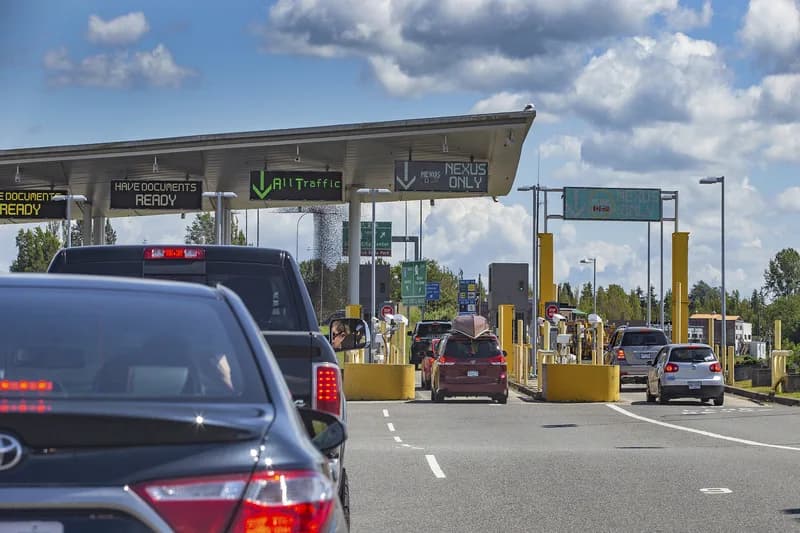
President Donald Trump paused a set of 50 percent tariffs on about $20 billion in Canadian goods late on August 18, hours before they were to take effect, saying the two countries had reached a deal that still needs to be signed.
I have paused the 50% Tariffs against Canada, that were scheduled to kick in tomorrow morning for a three day period, based on the fact that Canada and the U.S.A., subject to the finalization of documents, have a DEAL! The great Keystone XL Pipeline, long ago killed by Sleepy Joe Biden, may be awoken from the grave!
The levies had been set to take effect at 12:01 a.m. on August 19. Trump posted the announcement on Truth Social at 10:15 p.m., less than two hours before the deadline, after weeks of talks that ran through the Office of the U.S. Trade Representative and the Commerce Department in Washington. Prime Minister Mark Carney confirmed the postponement and said negotiations would continue.
What the pause covers
The duties would have hit nearly $20 billion in imports, according to the U.S. Trade Representative, reaching goods that turn up in ordinary households: wine, beer and spirits, dairy, cement, plywood, furniture, clothing, fishing rods and hockey sticks among them.
The administration excluded energy, potash, fish, critical minerals and anything already carrying Section 232 duties, which is why steel, aluminium, cars and lumber are untouched. The tariffs would have covered about 5 percent of the $412 billion in goods the United States imported from Canada in 2024. The plan dates to July 20, when Trump signed three proclamations in response to what U.S. officials call discriminatory Canadian trade measures.
Trump imposed the levies under Section 338 of the Tariff Act of 1930, which no president had used to impose tariffs since it became law. The section allows duties of up to 50 percent, requires no investigation to justify them and sets no limit on how long they can stay, though it bars them from taking effect within 30 days of the proclamation.
The choice of statute was deliberate. The Supreme Court struck down Trump's earlier tariffs under the International Emergency Economic Powers Act in February, ruling 6 to 3 that the law does not authorise them. Section 338 gave the administration fresh legal footing without the procedural steps other tariff tools demand.
Two governments, two tones
Carney's account was more restrained than Trump's. He said substantial progress had been made but that important work remained, and a day earlier had called the talks very intense and delicate. His office said Canada had spent weeks in intensive discussions to deliver certainty and real benefits for its businesses, workers, farmers and families. Carney did not use the phrase three days; he gave only an end point of August 21.
Trump described a finished deal. Carney described progress toward one. Both governments agreed on the mechanics: the tariffs are postponed until the end of the day on Friday, August 21.
The trade representative's office said the agreement would include comprehensive market access for all American goods, economic security commitments and digital trade alignment. Canada has not confirmed those points, and the two governments' descriptions of the deal do not line up in every detail.
The White House proclamation says that, according to senior executive branch officials, Canada has expressed a commitment to remove measures the administration considers discriminatory against U.S. alcohol, dairy and motor vehicle exports. Canada has not confirmed that, and has not said what it sought in return.
A three-day clock
The window is narrow. Negotiators have until the end of the day on August 21 to turn a framework into a signed document.
The proclamation does not suspend the duties pending a decision. It moves their effective date to August 22, so if nothing is signed they begin at 12:01 a.m. that Saturday with no further action from the administration.
The Canadian delegation is led by Dominic LeBlanc, the minister responsible for Canada-U.S. trade, and chief trade negotiator Janice Charette. Both have been in Washington since August 4 and worked through the weekend. They met U.S. Trade Representative Jamieson Greer virtually on August 16, the fifth such meeting, in a session both sides called constructive, and met Greer and Commerce Secretary Howard Lutnick at the Commerce Department on August 17.
Trump and Carney spoke by phone on the afternoons of August 17 and August 18.
The pause moved only the Section 338 tariffs. Existing U.S. duties on Canadian steel, aluminium, cars and lumber stayed in place, and Canada has been pressing Washington to ease them. The United States declined to renew the U.S.-Mexico-Canada Agreement at its July 1 joint review, putting it into annual reviews and setting a termination date of July 2036 unless the parties agree otherwise. The agreement remains in force meanwhile.
The liquor question
Any Canadian commitment on American alcohol runs through the provinces, which control liquor sales. Ontario Premier Doug Ford has said his province would put American drink back on shelves if steel, autos, forestry, agriculture and manufacturing are protected, and Quebec aluminium with them. In April he said American alcohol would return only once U.S. tariffs were removed. Other provinces would have to follow for any pledge to hold.
The relationship had frayed over an Ontario advertisement. The province ran a spot during Game 1 of the World Series on October 24, 2025, using edited clips of a 1987 Ronald Reagan radio address on trade. The Ronald Reagan Presidential Foundation said Ontario had used selective audio and video and that it was reviewing its legal options. Trump called off trade talks that day and added a 10 percent tariff on Canada. Ford pulled the advertisement the following Monday, and the two sides eventually returned to the table.
What households would feel
For shoppers, the immediate effect of the pause is that prices on the affected goods do not rise this week. Beer, wine, cheese and hockey equipment would have carried the new duty had it taken hold at midnight, and importers had been bracing for the added cost to reach store shelves.
Neil Herrington, senior vice president for the Americas at the U.S. Chamber of Commerce, said on August 18 that the tariffs would damage both economies, drive up costs for U.S. families, disrupt supply chains and put at risk the 13 million American jobs that depend on trade under the U.S.-Mexico-Canada Agreement. The two countries traded $909 billion in goods and services in 2024, according to the U.S. Trade Representative.
Keystone back in the mix
In the same post, Trump wrote that the Keystone XL pipeline "may be awoken from the grave." He gave no detail on how or when, and the pipeline does not appear in the proclamation. Joe Biden revoked its permit in January 2021 and TC Energy abandoned the project that June.
Trump signed a presidential permit on April 30 authorising Bridger Pipeline Expansion LLC to build at the international boundary in Phillips County, Montana, a project partnered with South Bow, the company spun out of Keystone XL, that could carry up to 550,000 barrels a day and use pipe originally bought for it. State and federal approvals are still outstanding. It was unclear whether Trump was referring to that or to something broader.
Greer has cast Canada as an outlier. At the Iowa State Fair on August 14 he said that over the past year and a half only two countries, China and Canada, had chosen to retaliate rather than negotiate, and that it was not the kind of company Ottawa would want to keep. That framing is the administration's: the European Union has adopted and then suspended retaliation packages, and Brazil announced its own in July.
Carney has said everything is on the table if there is no agreement, but Ottawa has named no products and Carney has said Canada would not retaliate before the tariffs took effect.
What comes next
Neither government had published a final agreement by the morning of August 19. Talks were set to continue against the Friday deadline, with the duties taking effect automatically if nothing is signed. Carney said Canada remained focused on building a stronger, more independent and more competitive economy at home.
Sources for this article
7 sources · all documents · Retrieved 19 Aug 2026
- 1NBC News: Trump pauses 50% tariffs on Canada for 3 days
- 2The Washington Post: Trump says he has paused 50% Canadian tariffs, touting last-minute deal
- 3NPR: Trump says U.S. and Canada reached deal to delay 50% U.S. tariffs on Canadian imports
- 4Axios: Trump pauses 50% tariffs on Canadian goods for 3 days
- 5Forbes: Trump Pauses New 50% Tariffs On Canada Claiming Last-Minute Deal
- 6Bloomberg: Trump Pauses 50% Canada Tariffs for Three Days Subject to a Deal
- 7NewsNation: Trump puts pause on Canadian tariff increase ahead of deadline
More from Threadline News
 BusinessMeta's 'problematic use' label undercounted teen harm, witness testifies20 Aug 2026
 BusinessSpent SpaceX rocket carves 60-foot crater on the Moon19 Aug 2026
 BusinessTreasury yields hit a 19-year high as debt supply meets thinner demand19 Aug 2026
 BusinessMortgage rates near 7% as 30-year Treasury yield tops 5.32%18 Aug 2026
 BusinessFrasers rescues Harvey Nichols in pre-pack deal, saving 1,000 jobs17 Aug 2026
 BusinessCourt filings tie Anthropic's book purchases to AI training16 Aug 2026