The job market is cooling and the Fed is still debating a rise
Fed officials spent the week arguing for higher rates, with inflation running at 3.7 percent.
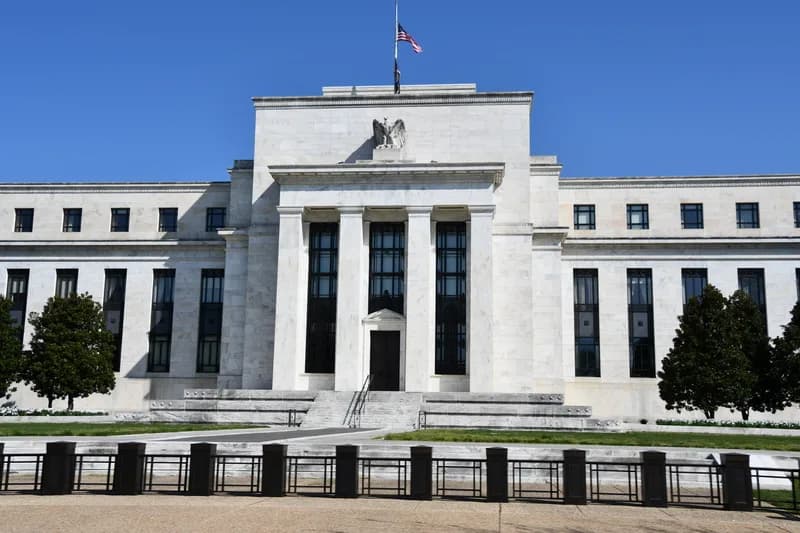
Futures traders spent the morning of Friday, August 7, rewriting their bets on the Federal Reserve. Before the July employment report they thought a rate rise at next month's meeting was more likely than not. Within hours they thought it was less likely than not, and they were split on where rates end the year.
The trigger was a labor market that turned out to be softer than the Fed has been assuming. Employers cut 23,000 jobs in July, and revisions took 103,000 jobs out of the May and June counts. The unemployment rate slipped to 4.1 percent from 4.2 percent, but mostly because people left the labor force rather than because they found work.
What makes this different from the last several years is the direction of the argument. The question inside the Fed right now is not when to cut. It is whether to raise, because inflation has stayed above target long enough that several officials have run out of patience with waiting.
Where the Fed actually is
The Federal Open Market Committee met in late July and left its target range for the federal funds rate at 3.5 to 3.75 percent. Three officials dissented, all of them wanting a rise. Their argument, reported afterwards, was that policy at its current setting is not delivering the restraint needed to bring prices under control.
Their case is straightforward. The Fed's preferred inflation gauge, the personal consumption expenditures price index, was up 3.7 percent over the year to June. The target is 2 percent. Inflation has now been above that target long enough that part of the committee has stopped waiting for it to fall on its own.
| Federal funds target range | 3.5 to 3.75 percent |
| PCE inflation, year to June | 3.7 percent |
| Unemployment rate, July | 4.1 percent |
| Nonfarm payrolls, July | down 23,000 |
| Average hourly earnings, year to July | up 3.2 percent |
As filed
In the days after the meeting the argument spilled into public. The presidents of the Kansas City and St. Louis Fed banks both said they had pushed for higher rates at the gathering. Several officials who voted to hold have since shown a willingness to act if the data calls for it.
John Williams, the president of the New York Fed, said his own forecast is for inflation to fall in the second half of this year and further next year. He added that if the economy is not on a path back to 2 percent, it would, in his words, absolutely be appropriate to act.
Lisa Cook, a Fed governor, said on August 5 that she would support an increase if it became necessary to bring inflation down, and added that it might not become necessary. Anna Paulson of the Philadelphia Fed, who holds a vote, wrote that she has an open mind, and said in a television interview the answer could be higher rates or the same rates for longer.
Then the jobs number landed
A weakening labor market complicates all of that. Raising rates to slow prices also slows hiring, and hiring was already running at an average of 34,000 a month before July turned negative. Reuters reported that officials may now have to weigh how a rise aimed at inflation would land on hiring that is already low.
Not everyone at the Fed thought Friday changed much. Thomas Barkin, the president of the Richmond Fed, said in a television appearance that the report fit what he had already been seeing, and declined to treat it as a turning point.
very consistent with how I've been seeing the labor market, which is, it's not loose, it's not tight
That reading has a technical basis. Forecasters who follow the committee closely say its members now treat the breakeven pace of job growth, meaning the number of jobs needed just to keep up with a labor force that is barely growing, as quite low. On that view a small monthly decline is not the alarm it once was.
The labor force numbers support the point. The share of adults working or looking for work fell to 61.4 percent, down 0.7 percentage point since January. If fewer people are entering the workforce, fewer new jobs are needed to absorb them, and the unemployment rate can hold steady on very little hiring.
The economists are split
Forecasters divided almost immediately, and the split is not really about the jobs number. It is about which half of the Fed's mandate the committee is currently steering by. One camp holds that officials are looking past the labor market at prices, and that only the inflation data due the week of August 10 will settle September.
I am not sure today's downside surprise will materially move the needle for a Committee that is looking much more closely at inflation data and seems poised to hike rates if the July and August inflation prints are firm
Rick Rieder, chief investment officer of global fixed income at BlackRock and one of the names that had been on the shortlist for the Fed chair job, took a similar line in a client note, writing that nothing was radically changing and that the Fed would keep its attention on inflation.
The other camp reads the same data and reaches the opposite conclusion. Citibank's economists told clients that softer labor data and cooler inflation ahead leave the committee balancing the risk to prices against the risk to jobs, and that their base case is a cut delivered in October.
Hikes are unlikely and we continue to think the next move is a cut
The chair who will not say
What makes the guessing louder than usual is who is not talking. Kevin Warsh, the new Fed chairman, does not give guidance about where policy is heading. He takes the view that markets should form their own judgments rather than be led to them.
That is a defensible position and a break from two decades of practice. The cost is that regional bank presidents and governors have become the main source of signal, and they do not agree with each other. Friday's scramble in futures pricing is partly a scramble for information.
It also means the futures market is doing more work than usual as a forecast. Those prices are a wager, not a plan, and on Friday they moved on one data release. They have been wrong before, in both directions, and nobody at the Fed has committed to anything they imply.
For households the practical stake is ordinary. The federal funds rate feeds fairly directly into credit card rates and other short term borrowing, less directly into mortgages, which track longer rates. A rise in September would make borrowing dearer at a moment when the job market is producing fewer paychecks to service it.
What to watch
Consumer price figures are due the week of August 10, and both camps agree they matter more than the July jobs report did. A firm reading would strengthen the officials who want to move in September. A soft one would take the argument off the table for now.
The August employment report follows on September 4. The committee meets on September 15 and 16. That leaves two data points and eleven days between the last of them and the decision, which is not much room for a committee that already split three ways at its last meeting.
One more release sits in between and gets less attention than it deserves. On August 28 the Bureau of Labor Statistics publishes its preliminary annual benchmark revision, which checks the payroll survey against employer tax records, which are a fuller count than the monthly survey can manage.
If that check finds fewer jobs than the survey counted, the labor market will look weaker still, and it will look that way two weeks before the vote. None of which settles the question the committee has to answer, which is what to do about prices that have not come down.
Sources for this article
3 sources
More from Threadline News
 BusinessMeta's 'problematic use' label undercounted teen harm, witness testifies20 Aug 2026
 BusinessSpent SpaceX rocket carves 60-foot crater on the Moon19 Aug 2026
 BusinessTreasury yields hit a 19-year high as debt supply meets thinner demand19 Aug 2026
 BusinessTrump pauses 50% tariffs on $20 billion in Canadian goods19 Aug 2026
 BusinessMortgage rates near 7% as 30-year Treasury yield tops 5.32%18 Aug 2026
 BusinessFrasers rescues Harvey Nichols in pre-pack deal, saving 1,000 jobs17 Aug 2026
The Numbers
AllOfficial series, each dated to the observation it comes from.
Federal Reserve Bank of St. Louis